
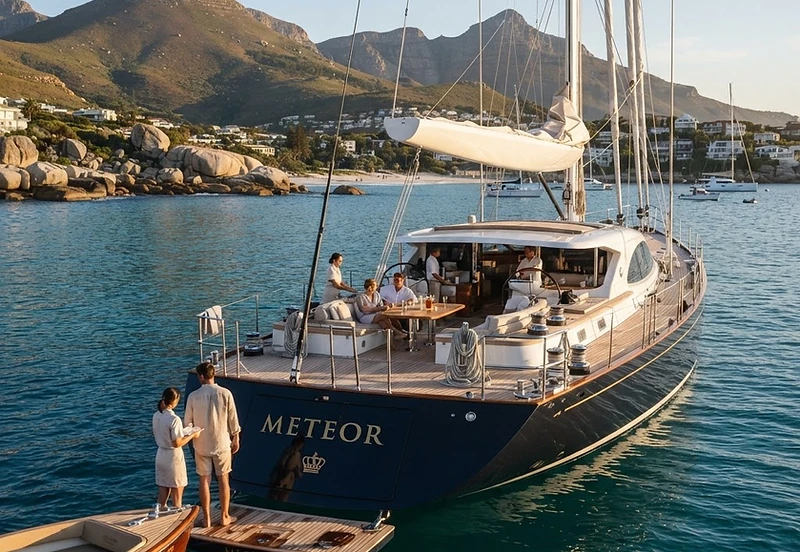
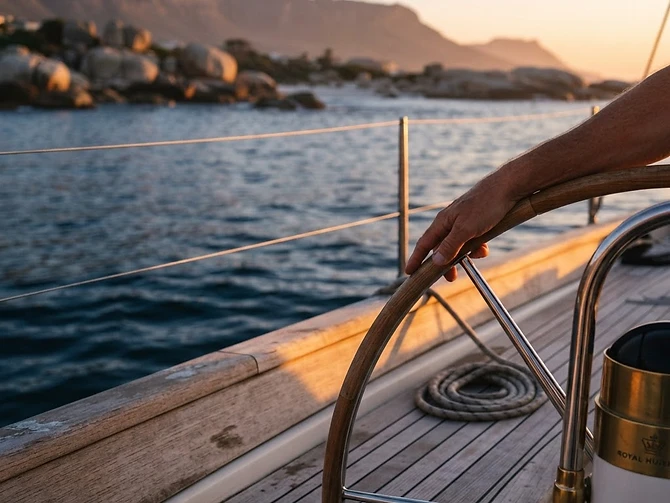
The Royal Huisman yawl Kestral held her station in the protective lee of the Twelve Apostles, her expansive teak decks gleaming with a golden, late-afternoon patina under the low-hanging South African sun. In these complex waters off the Cape Peninsula, where the frigid, nutrient-rich Benguela current collides with the warmer, expansive breath of the Agulhas, the rhythm of a yachting charter demands more than mere navigation—it requires a profound sensitivity to the shifting environment. As the crew of the Kestral prepared the tender, the objective was not the usual high-octane shore excursion to the vibrant bustle of the city, but a deliberate move toward the pristine, low-impact stillness of a secluded beach experience at Oudekraal, a cove framed by ancient granite and the dramatic verticality of the mountain range.
The Geometry of Low-Impact Shore Leave
Stepping off the tender onto the sun-warmed granite boulders of the cove, the contrast between the vessel’s engineered, aerodynamic precision and the raw, unadorned coast is immediate and striking. Sustainability here is not merely an institutional directive or a box to be checked; it is a refined port ritual. The crew manages these beach departures with a practiced, near-silent efficiency, ensuring that the only traces left behind are the transient, vanishing impressions of sandals in the sand. There is a profound elegance in this restraint—a conscious, collective effort to align the high-performance yachting lifestyle with the delicate, unforgiving ecology of the Atlantic Seaboard. To arrive by water is to see the coast as it was meant to be viewed: not as a conquest, but as a temporary, privileged borderland.
Refined Rhythms in the Lee of the Twelve Apostles
As dusk began to settle, the shore transformed into a sanctuary of cooling air and salt-misted light. We sat on low, reclaimed-timber benches, sharing a platter of locally sourced Saldanha Bay mussels and crisp, wild-harvested greens, served on natural slate boards. The preparation was deliberately modest, eschewing the opulent waste often associated with grander beach affairs in favor of a clean, honest aesthetic. Overheard, the chief stewardess reminded the deckhand to recalibrate the light-dampeners before clearing the site, a small, thoughtful gesture that spoke volumes about the stewardship required of those who serve aboard such vessels. The sea, vast and indifferent, pulsed gently against the hull of the Kestral, a rhythmic reminder that our presence is a guest’s privilege, held together by the quiet discipline of a crew that understands the invisible line between indulgence and preservation.
As the stars began to pinprick the indigo sky over the silhouette of Table Mountain, the transition from the frantic energy of the V&A Waterfront to this quiet, remote anchorage felt absolute. We returned to the deck, the night air sharpening to a crisp, oceanic bite, and the yacht swung gently on her chain. There is a quiet, contemplative pride in such an evening—the deep satisfaction of having experienced the wild, rugged periphery of Cape Town without disturbing the fragile balance that keeps these anchorages clear, dark, and perfectly still. As the anchor chain rattled softly, securing us for the night, the world felt simultaneously larger and more intimate, held in the cradle of a well-kept vessel.






