
The Geometry of the Yasawa Drift
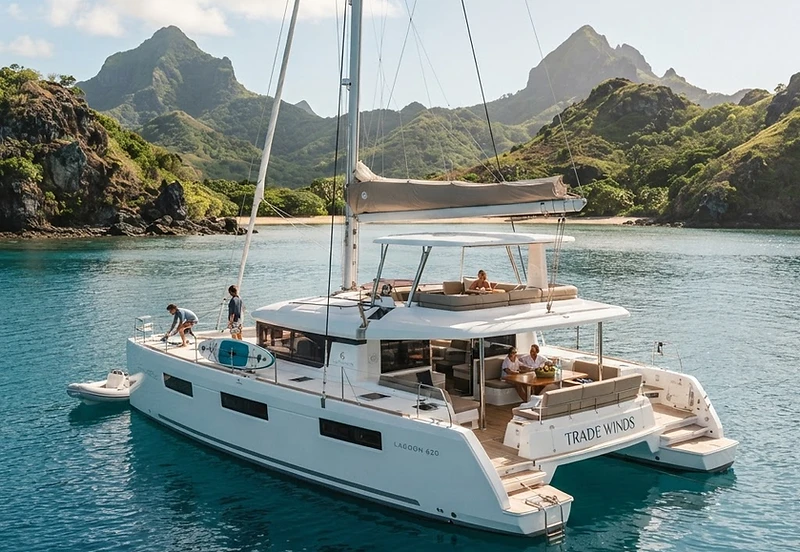
Stepping onto the aft deck of the Lagoon 620, the immediate sensation is one of suspension. As we clear the channel out of Port Denarau, the hull cuts into the deep indigo of the South Pacific with a distinct, rhythmic hum that vibrates through the teak. We are bound for the Yasawa Islands, a chain where the geography feels ancient and the water shifts from translucent glass to deep, resonant sapphire. Under the guidance of our captain, the catamaran maintains a steady heading, its twin hulls providing a stable platform as we leave the bustle of Viti Levu behind.
Life at sea here is a ritual of movement and stillness. We pass the ragged, volcanic silhouettes of Waya and Naviti, watching as the shadows stretch long across the water. On board, the day is defined by the tension of the sheets and the shifting light. I spent the morning sitting on the trampoline, feeling the spray hit the mesh—a sharp, cooling contrast to the intensity of the Fijian sun. There is a precise, practiced choreography to the crew as they navigate the shallow reefs; they move with an economy of motion, eyes constantly scanning the depth sounder and the water’s color for the telltale change in gradient that marks a coral head.
Anchorages and the Evening Vigil
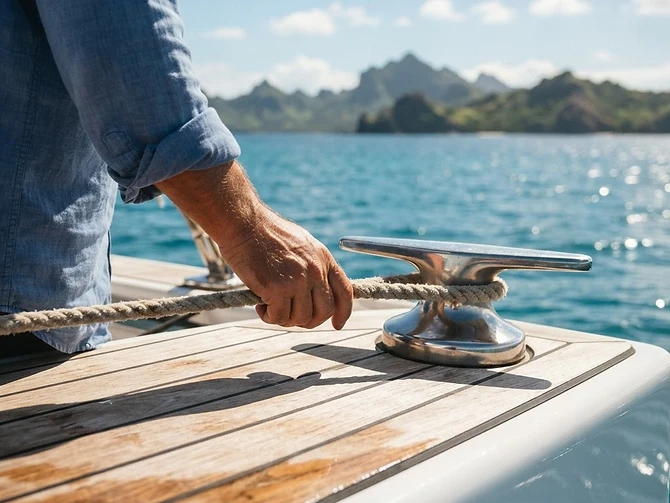
By late afternoon, we reach the protected waters off Sawa-i-Lau. Dropping the anchor is not merely a technical necessity; it is the moment the world narrows down to our immediate horizon. As the chain rattles through the windlass, the quiet that follows is profound. We descend into the lagoon, the catamaran swinging gently on its bridle. This is where the rhythms of the charter take hold: a dinner of fresh-caught wahoo prepared by the chef in the open-air galley, followed by the simple indulgence of watching the Southern Cross emerge above the masthead. The dining is unfussy, rooted in the availability of the Pacific harvest—lime, chili, and the bracing salt of the sea.
The ritual of the port-side evening is absent here, replaced by the isolation of the archipelago. We are entirely self-contained, our power drawn from the sun and our water converted from the very sea that holds us. The transition from the exertion of the day to the evening’s stillness is marked by the smell of roasting snapper and the distant, rhythmic slap of the Pacific swell against the fiberglass. Sitting on the flybridge, one notices how the boat becomes a secondary landscape, an extension of the islands themselves, tethered to the tide and governed by the persistent, cooling trade winds.
As the week winds down, the passage back toward the mainland feels like a departure from a different frequency. The Yasawa drift leaves a residual stillness in the blood; the constant, low-frequency motion of the catamaran becomes a natural state. We return to the docks not with the urgency of a traveler, but with the quiet, salt-etched awareness of those who have surrendered their time to the dictates of the wind and the depth of the shelf.






