
The Vertical Anchorage
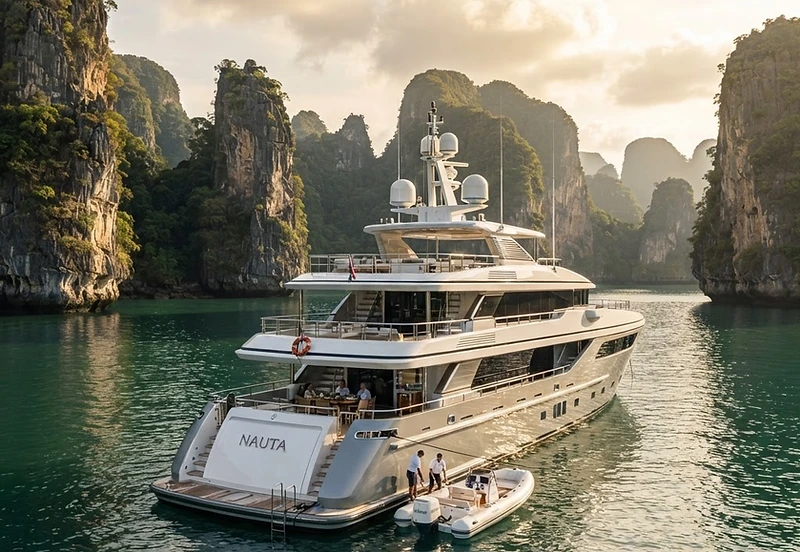
The morning light in Phang Nga Bay does not hit the water directly; it filters through the towering, moss-slicked limestone karsts that define this reach of the Andaman Sea. Anchored in the shadow of Koh Hong, the 45-meter Nautor’s Swan Gaia felt like a deliberate extension of the geology surrounding us. There is a specific tension in holding position here, where the depths shift abruptly from twenty meters to a shallow shelf of coral within the span of a boat’s length. As the crew adjusted the snubbers, the metallic snap of the line against the polished deck was the only sound disrupting the stillness of the emerald water.
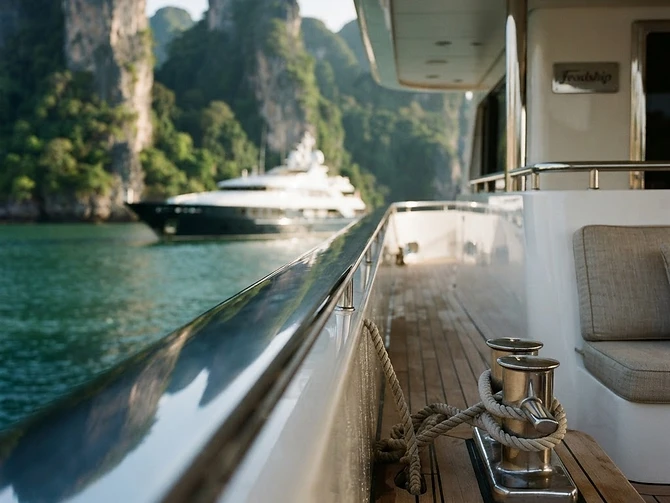
Standing on the teak aft deck, one cannot help but notice the conversation between the vessel’s naval architecture and the surrounding shore. The verticality of the karsts, with their stratified, ancient rock faces, finds a strange, human-made counterpart in the rising masts and multi-deck profiles of modern yachts. On Gaia, the interior design by Mario Pedol utilizes bleached oak and glass partitions that mimic the layering of the limestone cliffs. When we stepped onto the tender for a short run to a remote, private villa hidden in the mangroves near Koh Yao Noi, the transition from ship to shore felt seamless. The villa, designed with open-walled pavilions and floating stone walkways, mirrored the yacht’s own deck layout—a series of platforms designed to bridge the gap between human comfort and the wild, salt-heavy environment.
Reflections on the Andaman
By midday, the heat became a physical weight, tempered only by the breeze funneling through the narrow channels between the islands. We motored toward the Ao Po Grand Marina, a facility that serves as a bridge between the deep-water cruising grounds of the Andaman and the mainland’s infrastructure. Watching the yachts maneuver into their slips, the architecture of the marina—with its cantilevered concrete overhangs and vast, open-air docking bays—echoed the same structural philosophy found on board. The Marina House, a private residence perched on the headland overlooking the bay, shares this language; its vast, floor-to-ceiling glass panes reflect the movement of the yachts below, turning the bay into a living, kinetic gallery of marine engineering.
Over a late lunch of fresh snapper and lime at a local beach club on Koh Naka Yai, the conversation drifted toward the ergonomics of life aboard. We spoke about the way light enters the saloon of an Oceanco or the way the lines of a Feadship are drawn to capture the trade winds. It is a shared discipline; the house on the cliff and the yacht at the buoy are both instruments for observing the tide. As the sun began to dip, casting long, bruised-purple shadows across the limestone spires, the distinction between the built environment and the vessel seemed to dissolve entirely into the dark, reflective surface of the bay.
As we returned to the mooring, the scent of damp earth and brine hung thick in the air. The transition back to the deck was marked by the familiar, reassuring hum of the stabilizer fins settling the vessel into the slow, rhythmic swell. In the Andaman, the luxury is not in the ornament, but in the precision of the frame—whether that frame is built of teak and steel or of ancient, rising rock.






