
The Transition of the Trades
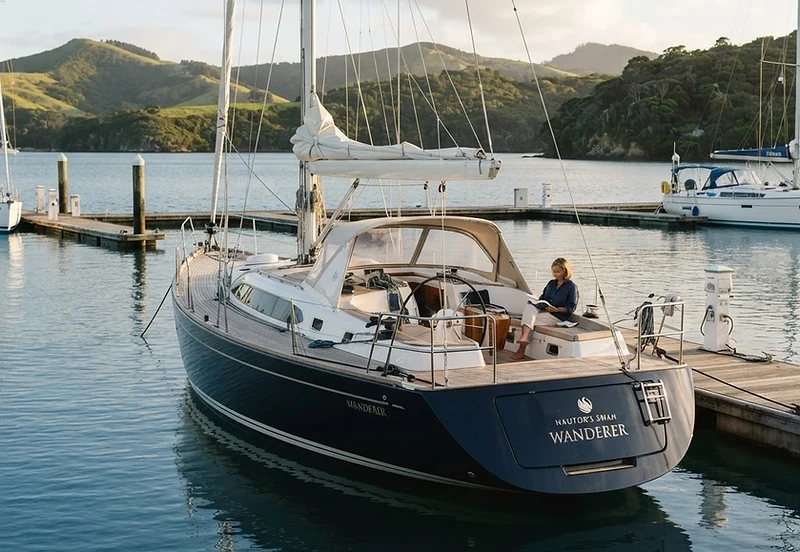
The transition from the open, cobalt swells off Cape Brett to the inner tranquility of Opua is not merely a change in depth or heading; it is a fundamental recalibration of the vessel. Aboard a Nautor’s Swan, the transition is felt in the tension of the rigging as the wind falls away, replaced by the persistent, rhythmic slap of water against the hull. As we cleared the headland, the boat settled, her deep keel finding the soft, holding mud of the Bay of Islands. Winter here does not mean cold, but rather a sharpening of the light and a stillness that makes the hum of the generator sound like a cathedral bell. In these latitudes, the transition is tactile; the chaotic salt-spray of the Pacific is traded for the brackish, pine-scented air that rolls off the Northland hills, cooling the decks long before the sun disappears.
The Rituals of the In-Port Calm
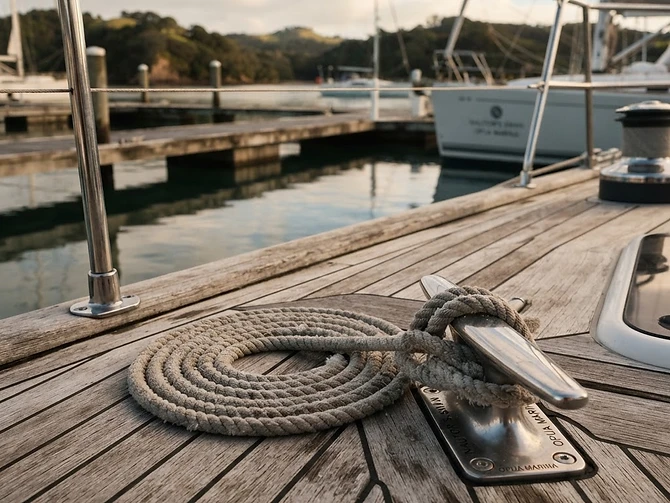
Life in port during the off-season is defined by a slow, intentional deceleration. The hurried pace of island-hopping gives way to the deliberate choreography of the morning. We spend our hours preparing for the coming warmth, but within the protected harbour, the yacht transforms from a machine of passage into a home of refined stability. I remember the morning clearly: the smell of damp earth carried on a light southern breeze, and the sight of the steam rising from a bowl of hot porridge as we sat on the aft deck, watching a lone cormorant dive near the marina entrance. The crew moved with a quiet, practiced ease, folding lines with geometric precision and attending to the subtle upkeep that the salt air demands. There is a profound wellness in this domesticity—the act of oiling the teak, the methodical polishing of stainless steel, and the simple, quiet camaraderie that forms when the demands of the open sea are momentarily suspended. It is a period of intimacy with the vessel, a time to hear the ship breathe as she rests in the calm, sheltered embrace of the Opua Marina.
Reflections at the Berth
As the sun begins to retreat behind the rolling hills of the Northland, the interior of the yacht takes on an amber, insulated glow. Dining in the saloon becomes the anchor of our existence. We prefer local ingredients gathered from the markets in Russell—sharp, earthy greens and freshly caught snapper that tastes of the deep channel. There is a texture to the evening here that one misses in the rush of a summer crossing; the sound of water lapping against the hull feels like a heartbeat, steady and reassuring. The comfort of the winter quarters is not found in excessive ornamentation, but in the structural integrity of the cabin and the knowledge that the vessel is resting securely against the tide. Whether anchored off Urupukapuka Island or tied tight to the pier, the yacht remains our primary interface with this environment. To be at sea is to be in constant motion; to be here, in the wintering quiet, is to finally observe the currents we have spent the season crossing. We find ourselves studying the charts, not for the next waypoint, but to appreciate the distance already conquered, feeling the weight of the miles as we sit in the soft, low-angled light of an antipodean dusk.
We remain here until the barometer dictates otherwise, content in the knowledge that the vessel is as much a sanctuary as it is a vehicle. The Bay of Islands holds us in a state of suspended readiness, waiting for the first steady breeze of the new season to call us back to the horizon. In this lull, we have found that true luxury is not found in the reach of the next port, but in the stillness of the one we currently call home.






