
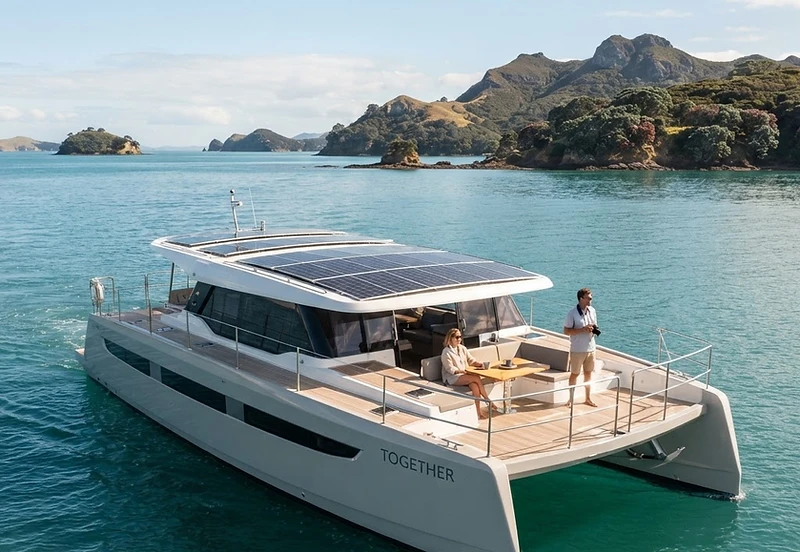
The morning in the Bay of Islands does not break with a roar, but with a pale, silver light that seems to seep upward from the Tasman Sea. Aboard our vessel, a custom-built 30-meter sloop—a masterpiece of naval engineering with expansive, integrated solar arrays seamlessly woven into the deckhouse architecture—the stillness is absolute. There is no thrum of a diesel engine, no vibration in the soles of our feet, only the rhythmic lap of water against the hull as we slip our moorings at Opua. Today, the plan is simple: we are moving entirely under the power of the morning sun, drawing energy directly from the crystalline New Zealand skies into our lithium-ion banks to propel us toward the secluded anchorages of Urupukapuka Island.
The Geometry of Silent Transit
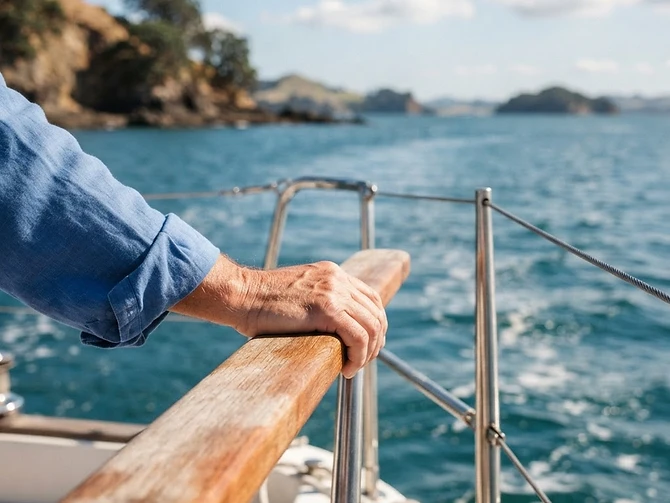
Steering through the narrow, verdant corridors of the bay requires a heightened, almost meditative vigilance. Without the jarring rhythmic pulse of a combustion engine, the yacht feels less like a machine and more like an extension of the current itself. We thread our way past the jagged, pōhutukawa-lined headlands, the deep crimson blossoms bowing to brush the waterline. Our helmsman, who has spent two decades charting these coastal waters, notes the distinct change in the tactile feedback of the wheel; the resistance is lighter, and the responsiveness to the rudder is sharpened by the absolute absence of mechanical vibration. We pass a local fishing boat, its crew pausing to watch as we glide by at a steady, silent five knots, an electric ghost moving amidst the volcanic islets. This is not mere technological performance; it is a return to the essential spirit of seafaring, where the weather and the day’s radiance dictate the cadence of the voyage.
The Catch and the Coastal Table
By early afternoon, we have dropped anchor in the lee of a hidden cove, the water so translucent one can discern the shifting shadows of snapper darting over the rippled sandy bottom. In the Bay of Islands, the table is a direct, vibrant expression of the tide. Our chef has been working in tandem with the local harvesters, having secured a haul of fresh kōura—the native rock lobster—from a fisherman operating out of the Russell wharf. Lunch is served on the aft deck, where the heat of the sun, filtered through the bimini, feels restorative rather than oppressive. We eat the lobster grilled simply over a small flame, finished with a splash of local Meyer lemon and a handful of hand-picked, foraged kawakawa leaves, their distinct peppery, medicinal bite contrasting beautifully with the succulent sweetness of the shellfish. It is a meal that tastes of the geology here: mineral, sharp, and profoundly connected to the cold, nutrient-rich currents that define this corner of the Pacific.
A Twilight Return
As the sun begins its long, amber descent toward the horizon, we hold our position, watching the light pool and shatter on the surface of the water. The yacht, having harvested the day’s radiance as it navigated, sits in a state of quiet, balanced readiness. There is a profound, meditative quality to life aboard a solar-powered vessel; the rituals of dining, the quiet reading in the saloon, and the evening conversation are entirely untethered from the relentless mechanical cadence that usually defines offshore life. As the last of the light fades behind the distant, jagged silhouette of the Cape Brett peninsula, the yacht settles into the rhythm of the incoming evening tide, a single, glowing sanctuary cradled within a velvet-black expanse of sea.






