
The Turn of the Tide off Trotternish
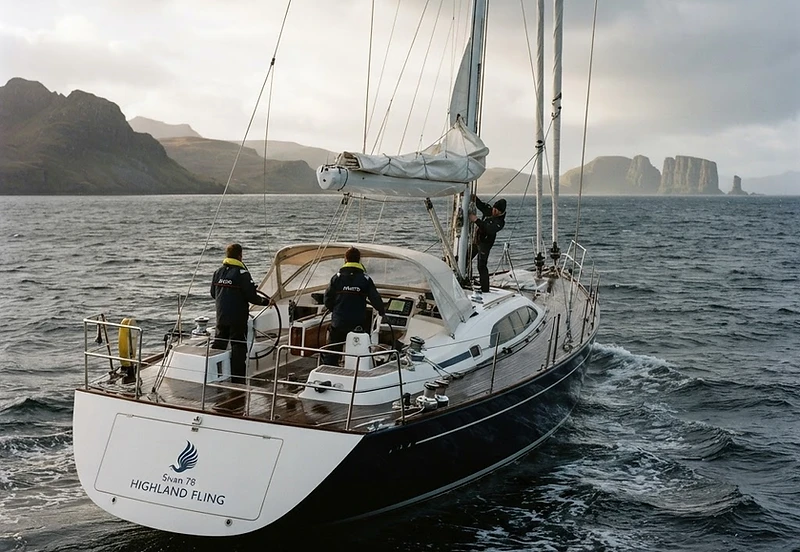
The dawn air off the Trotternish Peninsula carries the bracing scent of ancient peat and cold, deep-water brine. Standing at the helm of a Nautor's Swan 60, one finds that the vibration of the hull through the chop is a familiar language, one spoken in carbon fiber and tempered steel. We had spent the previous evening moored at Uig, watching the low sun catch the basalt cliffs as the town’s small fishing fleet retreated to the pier. By first light, the engine was barely a murmur, a necessary vibration to clear the shallows before the mainsail was hoisted, filling with a sudden, authoritative snap. In the Minch, the wind is rarely a polite guest; it arrives with a specific, sharp urgency that demands immediate attention to sheet tension and the tactile feedback of the wheel. The Swan handled the swell with a graceful, heavy-shouldered confidence, cutting through the grey-green water of the North Channel as if the vessel itself were part of the geology.
Midday Rhythms at the Shiant Isles
By noon, the Shiant Isles rose from the horizon like jagged, moss-covered teeth, their dramatic cliffs teeming with the frantic, wheeling flight of puffins and guillemots. Dropping anchor in the lee of Eilean Garbh, the scale of the landscape abruptly hummed with a different energy—a prehistoric stillness that contrasted sharply with the chaotic spray of our morning passage. Life aboard shifts in these moments; the focus moves from the technical precision of a cross-channel beat to the quiet, grounding rituals of the midday meal. In the sheltered cockpit, we laid out simple, honest provisions sourced from a small shop in Portree: crusty sourdough, heavy salted butter, and local langoustines still cold from the morning’s harvest. There is a distinct, unhurried cadence to dining while the tide pulls gently against the anchor chain, the sound of water lapping against the hull replacing the earlier roar of the open passage. 'The silence here is heavy enough to touch,' our navigator remarked, watching a grey seal crest the surface near our starboard quarter.
The Evening Drift Toward Scalpay
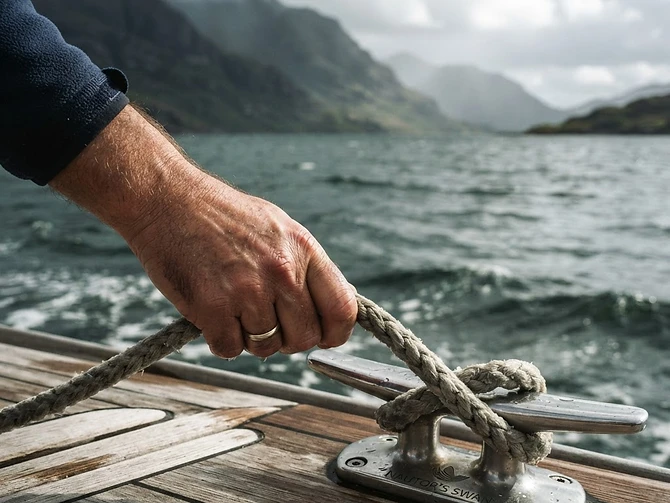
As the afternoon light began to bruise into deep shades of violet and slate, we weighed anchor to make for the shelter of Scalpay. The transition from the wild, Atlantic-battered exposure of the Shiant channels back into the protected, labyrinthine waters of the Harris coastline is a study in relief. Below deck, the interior, crafted in hand-polished teak, felt warm and solid against the encroaching evening air, a sanctuary of craftsmanship. Preparing the evening coffee, the soft metallic click of the galley hardware echoed the precision of the day's navigation. Anchored off the village, the distant lights of Tarbert blinked intermittently across the loch, a slow, terrestrial pulse that mirrored the rhythmic, gentle swinging of our vessel as the anchor held firm in the soft silt of the harbor floor. One finds, in the comfort of a well-designed interior, a profound appreciation for the separation between the raw, indifferent elements outside and the controlled, elegant luxury maintained within the bulkheads of a Nautor's Swan.
The Hebridean sea does not grant passage; it merely permits it for a short time, and every nautical mile feels earned. As we turned in, the masts of neighboring yachts formed dark, elegant silhouettes against the darkening sky, and the quiet of the anchorage settled deep into the marrow. There is no urgency in these waters, only the constant, watchful dialogue between the keel and the current, a reminder that on the sea, one is always a guest of the elements.






