
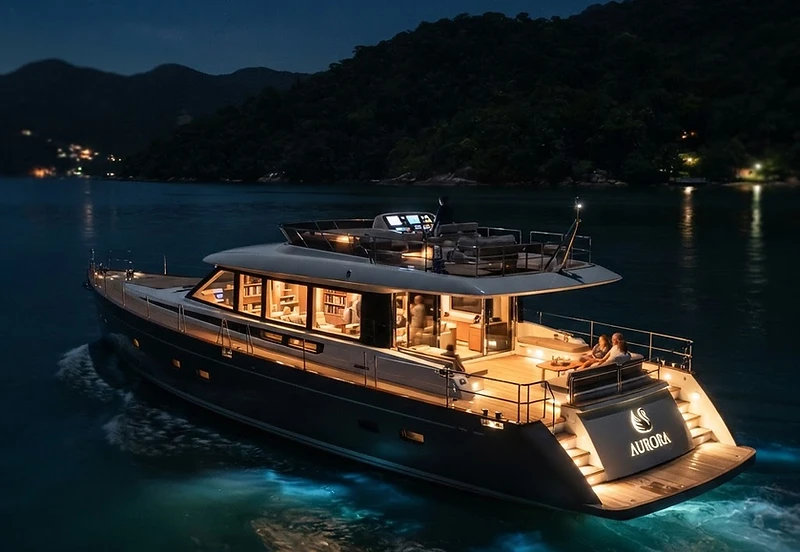
There is a specific, untethered quality to a night crossing along Brazil’s Costa Verde. As we pulled anchor from the emerald shallows of Saco do Céu, the silhouette of the mountains on Ilha Grande dissolved into the obsidian horizon. We were aboard a custom Nautor’s Swan, a vessel that cuts through the South Atlantic with the grace of a predator and the comfort of a grand library. The transition from the frenetic brightness of the day to the ink-wash of the midnight sea is not merely a change in geography, but a complete recalibration of how one experiences life at sea.
The Architecture of the Interior Horizon
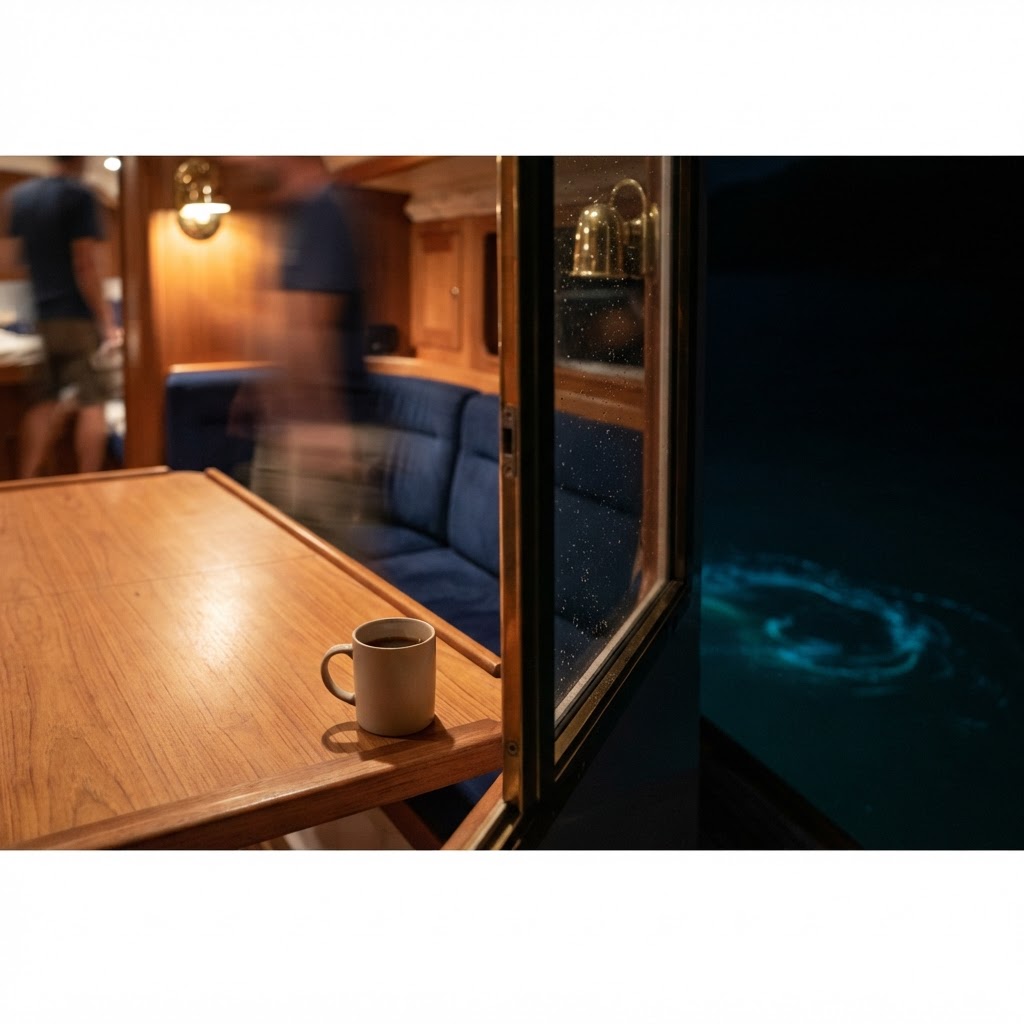
Stepping from the helm into the saloon, the environment shifts from the raw, wind-whipped salt of the exterior to the controlled, amber-hued warmth of the interior. Lighting design on a yacht like this is less about visibility and more about sculpting volume. Where a land-based villa—perhaps one of those brutalist, glass-fronted homes clinging to the cliffs above Angra dos Reis—might rely on grand, sweeping uplights to accent vaulted ceilings, our interior demands a more restrained touch. We use recessed, dimmable LED strips that trace the joinery of the teak cabinetry, creating a soft, indirect glow that mimics the way moonlight hits a calm harbor. It is designed to ensure that the eye is never drawn to the source of the light, but rather to the texture of the grain and the play of shadows across the soft furnishings. To walk through the corridors at sea is to move through a fluid space where the vessel itself acts as a mobile architecture, echoing the grounded stability of the colonial estates found in nearby Paraty.
Nocturnal Navigation and the Human Element
I remember sitting in the cockpit as we rounded the headland, the smell of damp forest and brine mingling in the air. Our captain, a man who knows the temperament of these waters as if they were his own pulse, insisted on dimming all non-essential bridge displays. In the silence, broken only by the rhythmic slap of water against the fiberglass hull, the navigation instruments became low-slung, soft red punctuations in the dark. It is a deliberate, necessary sensory deprivation. By lowering the intensity of the light, the darkness outside becomes navigable; we can discern the slight ripple of a current against the moonlight on the surface of the bay. I watched a steward pour a simple chilled cachaça, the glass catching the faint reflection of the mast lights, a tiny beacon in a vast, dark expanse. This is the luxury of the crossing: the ability to exist in a space that feels both infinitely expansive and meticulously contained.
As we made our approach toward the sheltered anchorage near Araçatiba, the boat functioned perfectly as a home afloat. We were not merely crossing water; we were navigating a private, illuminated boundary between the untamed Atlantic and the intimate, lit threshold of our own design. The balance of light, both the natural luminescence in the wake of the keel and the subtle, warm glow emanating from within the deckhouse, allowed us to exist in harmony with the rhythm of the tide. In the silence of the early hours, as the Southern Cross hung low above the jagged peaks of the mainland, the boundary between the architecture of the yacht and the vast, dark architecture of the bay became indistinguishable. We were at home on the water, guided by nothing more than the shadows we had chosen to leave behind.






