
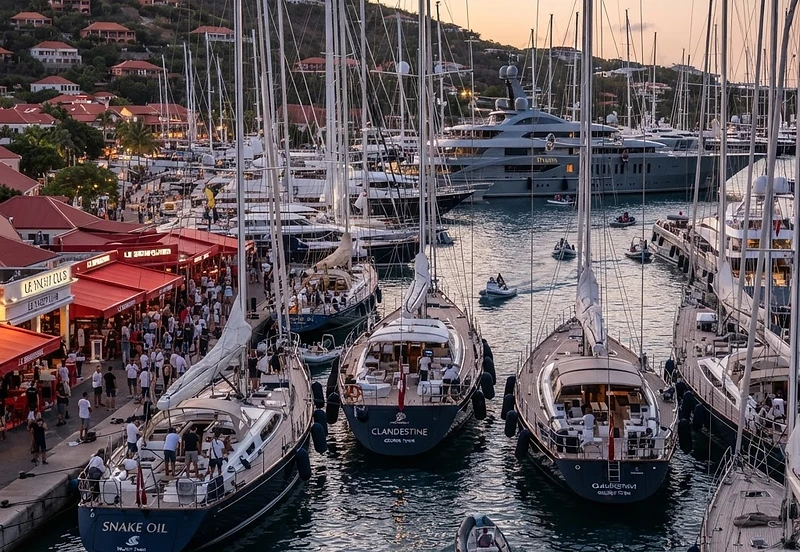
The approach to Gustavia in the final days of December is less a voyage and more a negotiation with geometry. As the sun begins to bleed into the Caribbean, the harbour transforms into a dense, vertical forest of carbon-fiber masts and polished stainless steel. From the flybridge of a 45-meter Perini Navi, the view is one of orchestrated tension; there is no margin for error in these shallow, volcanic waters when every meter of quayside is occupied by the vanguard of the global sailing elite. Watching the tender of a Lürssen navigate the narrow channels between a Nautor’s Swan and a sleek, custom-built Baltic 108 is to witness the true standard of professional seamanship: steady, quiet, and entirely devoid of ego.
Tactical Shelter and the Architecture of the Quay
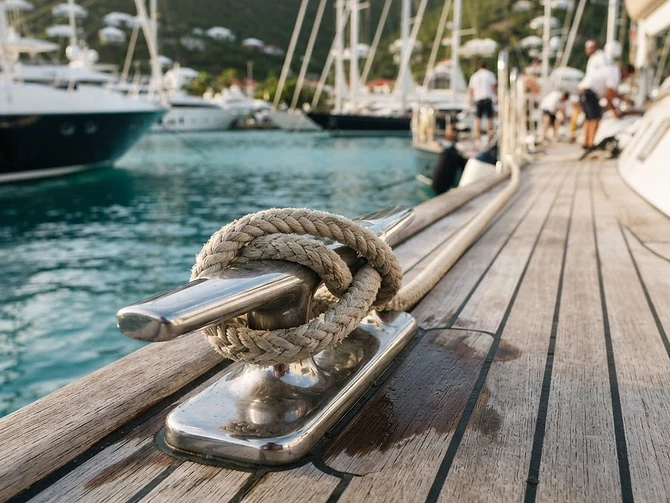
Safety within Port de Gustavia is anchored by the natural protection afforded by the headlands of St-Barthélemy, yet the harbour is not immune to the temperament of the trade winds. When the conditions shift, gusts can funnel down from the hills with startling intensity, testing the integrity of moorings and the precision of stern-to berthing. For a deep-keel vessel, the reality of the draft is an constant, unforgiving arithmetic. The inner harbour shallows quickly, necessitating a disciplined coordination with the Port de Gustavia authorities. Most masters opt to deploy a heavy anchor to supplement the quay lines, ensuring the hull remains clear of the seabed as the tide shifts. While the infrastructure—comprising robust bollards and reliable, if sometimes strained, shore power—supports the demands of a modern fleet, the true test remains the captain's ability to maintain a proper offset during the festive surge.
The Rhythms of the Port and the Aft Deck
Life aboard during the regatta cycle adheres to a cadence dictated by the salt and the schedule. Mornings in the basin begin not with fanfare, but with the rhythmic sound of a chamois against brightwork and the hushed, deliberate cadence of a deck crew prepping for the day’s tactical briefs. By afternoon, the focus shifts to the rituals of the transition. The logistical machinery of the harbour is impressive; security personnel maintain a presence that is effective without being obtrusive, and the delivery of fresh, ice-packed local grouper or high-grade components from the nearby chandlery occurs with the quiet efficiency of a well-oiled movement. As evening settles, the aft deck becomes the sanctuary, where the scent of sea spray gives way to the preparation of a late-season dinner. It is in these moments—sharing a quiet, unhurried meal as the lights of the harbour ripple against the hulls—that the intensity of the day’s race is finally set aside.
The Final Watch
As the clock nears midnight on the final day, the harbour falls into a reflective, shimmering silence that feels heavy with the accumulation of the year’s travel. The silhouettes of the yachts, bobbing in the dark, oily water, serve as a testament to the endurance of the vessels and the expertise of those who steward them. It is a shared breath, held between the wind and the quay, before the lines are eventually cast off and the fleet turns once more toward the open horizon, leaving only the wake of the year behind them.






