
The Granite Shelter
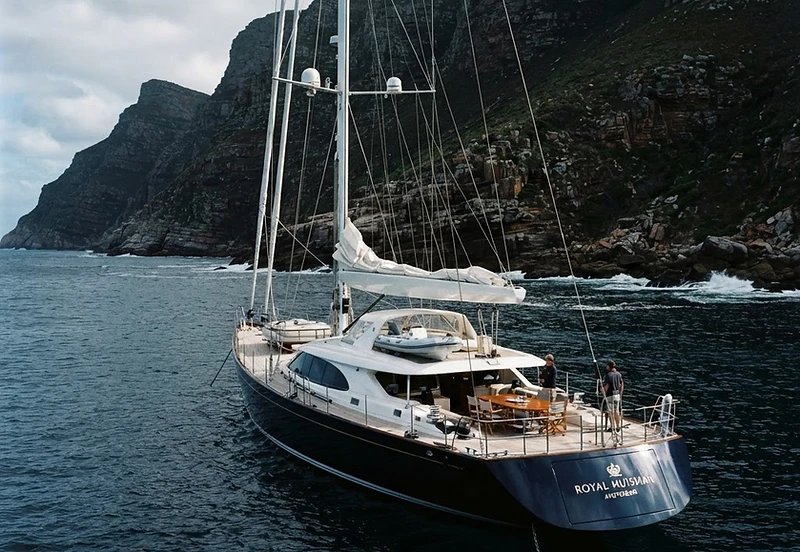
The Atlantic, when it chooses to be felt, does not merely touch the hull; it announces its presence with a hollow, rhythmic thrumming against the aluminum skin of our 48-meter Royal Huisman. We had spent the morning working our way south from the deep-water reaches of Saldanha Bay, the wind hardening as the afternoon drew in, turning the surface into a jagged, chaotic landscape of grey and white foam. By the time we tucked the vessel behind the wind-scoured northern tip of Dassen Island, the tension in the rigging—so taut that it hummed with the gale—relaxed into a low, mournful sigh. There is a profound, singular intimacy in being the only vessel in a natural harbour, the island acting as a jagged, granite buffer against the relentless, cold push of the Benguela Current. From the flybridge, the world felt condensed, distilled into the stark silhouette of the lighthouse, the chaotic swirling of gannets against the bruised sky, and the dark, kelp-strewn water, all held in a sudden, quiet state of suspension.
The Geometry of the Aft Deck
Life aboard, when isolated in such a peripheral and unforgiving latitude, naturally drifts toward a necessary simplification of ritual. As the wind whipped around the island’s jagged exterior, we retreated to the sanctuary of the aft deck, where the hand-laid teak was still warm from the brief, piercing sunlight of the late afternoon. This is not the space for heavy, ornate ceremony, but for the precision of comfort. We set the low table with heavy linens that would not dance in the remaining breeze, and the conversation slowed, mirroring the gentle, pendulous swing of the boat at anchor. The chief steward brought out a deliberate, simple spread: crusty, salt-dusted sourdough retrieved that morning from a bakery in Sea Point, local olives cured in sharp brine, and a bowl of fresh, firm yellowtail that had been landed just hours earlier in the bustling docks of Hout Bay. We didn’t need the formality of an internal dining room or the distraction of service staff. The sea air, sharp and rich with the scent of ozone and the decaying, earthy smell of drying kelp, was the only garnish required to elevate the meal.
The Descent into Evening
As the sun dipped decisively behind the western swell, casting a bruised, purple light across the endless horizon, the true scale of our solitude became apparent. Without the familiar ambient glow of the V&A Waterfront or the constant, mechanical pulse of harbour traffic in Table Bay, the yacht became a singular, illuminated organism drifting in the dark. We watched the crew secure the tenders, their movements deliberate and practiced, the hiss of the lines through the stainless steel cleats the only sound to interrupt the coming dusk. In these rare, isolated moments, the yacht stops being a mere vehicle for transit and becomes a vessel of total containment. I leaned against the polished caprail, the cold metal biting into my palms, and watched the navigation lights of a distant container ship passing far out on the horizon—an indifferent, mechanical pulse that only served to underscore the absolute stillness of our own private coordinate. The swell continued its rhythmic, heavy shove, but here, in the lee of the rock, the world felt perfectly, immutably fixed in time.
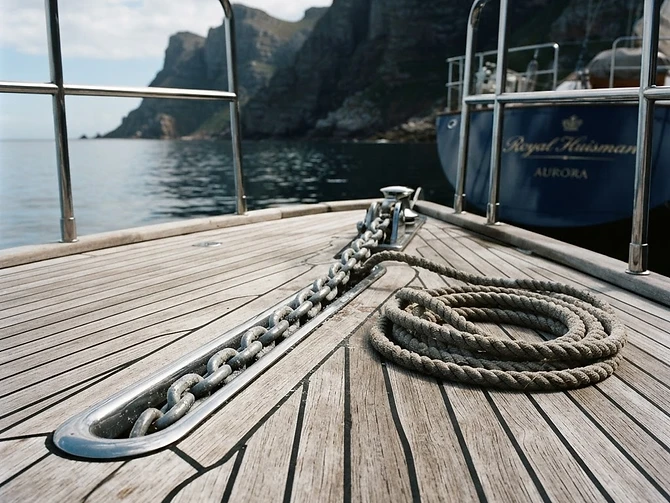
As night claimed the anchorage, the only evidence of the world beyond our deck was the rhythmic, sweeping rotation of the Dassen Island light, cutting a clean arc through the mist. The vessel swung lazily, held fast by her anchor chain, a quiet sentinel in the dark. I finished the last of the wine and stepped back into the warmth of the saloon, leaving the raw Atlantic to its own devices, secure in the knowledge that we were the only souls for miles, bound only to the tide.






