
The Resonance of Oak and Iron
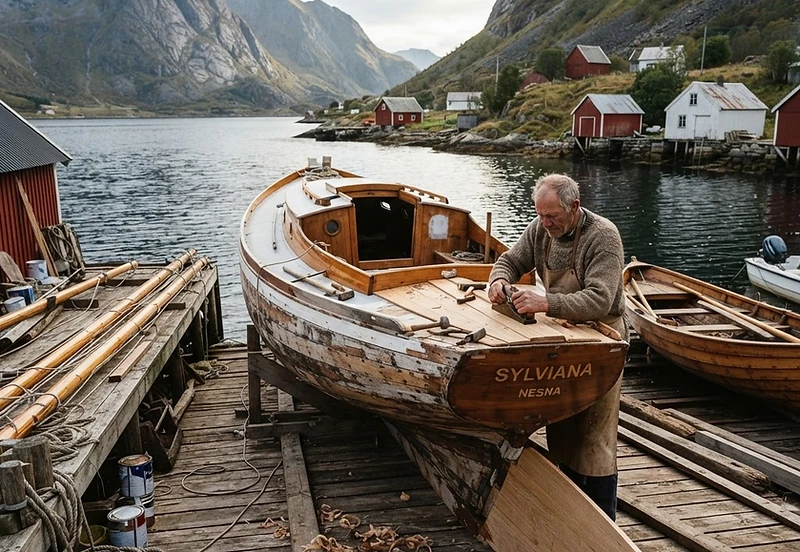
The scent hits you long before the vessel reveals her silhouette against the charcoal sky—a sharp, resinous perfume of raw pine shavings, heated linseed oil, and the persistent, metallic tang of the Norwegian Sea. Deep inside the drafty shed at a small, family-operated yard in Sandnessjøen, the 1930s-era yawl lay exposed, her hull opened up like an intricate anatomical drawing. To see a classic wooden yacht stripped of her topsides is a visceral, almost private experience; it is an unvarnished look at the skeleton of a machine designed for the unforgiving, heavy swells of the North Atlantic. Watching the shipwrights work is not merely a repair, but a quiet, rhythmic conversation between generations. They are steaming new white oak frames to match the curvature of the original design, their movements deliberate and slow, ensuring that the structural integrity of the vessel remains perfectly sympathetic to the master builder’s initial vision of 1934.
The Rhythm of the Curing Light
Life aboard a vessel undergoing such a profound metamorphosis is measured not in the frantic pace of a modern refit, but in the slow curing of varnish and the patient setting of epoxy. As the sun dips behind the serrated, violet silhouette of the Seven Sisters mountain range, the atmosphere inside the hull shifts entirely. We retire to the temporary galley set up on the quay, where the air is still thick with the cooling dust of sandalwood and copper. Dinner is a meditative affair: we share salt-baked cod, sourced from a local fisherman whose boat bobbed in the harbour just meters from our stern, served with earthy root vegetables pulled from the damp, mineral-rich soil of a nearby island farm. There is a distinct, melancholic cadence to these evenings on the Helgeland coast. We talk of tidal gates near the island of Tomma, of the way the deep-water channels turn ink-black under a brewing gale, and of the peculiar, ghostly light that refuses to leave the sky during the high summer. This is the authentic core of the refit: living in the threshold between the ghost of the past and the inevitable, salt-drenched passage to come.
A Quiet Return to the Current
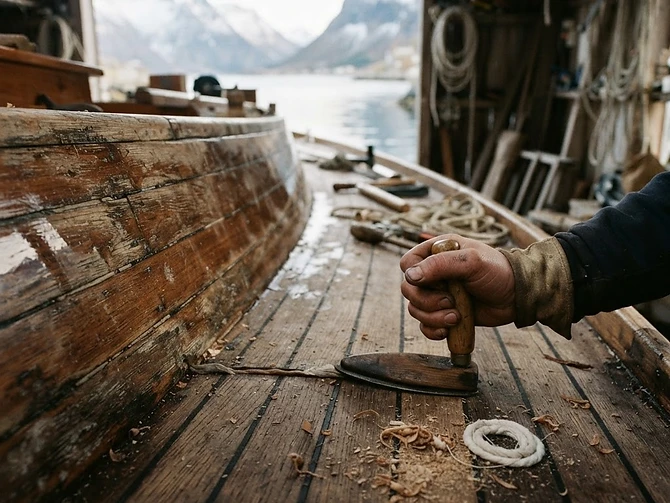
As the final planks of Alaskan yellow cedar are hung and the cotton caulking is driven deep into the seams with rhythmic taps of the mallet, the yawl begins to feel less like a construction project and more like a reclaimed soul. The crew concludes the day with a walk along the granite quay, the air biting and remarkably clear, leaving the quiet, varnished interior of the yacht to settle into its new skin under the hum of a single space heater. When the day of the launch finally arrives, the transition is startlingly seamless. The hull hits the frigid water with a dull, resonant thud that vibrates through the soles of our boots, a sound that signals a vessel reclaimed from history. As we cast off and move toward the mouth of the fjord, the rigging begins to hum a low, steady note against the freshening breeze. We lean into the first swells of the open sea, the timber hull flexing and groaning in a language as old as the currents themselves, moving with an ease that suggests she has been waiting for this exact horizon all along.






