
The Turn of the Tide at Royan
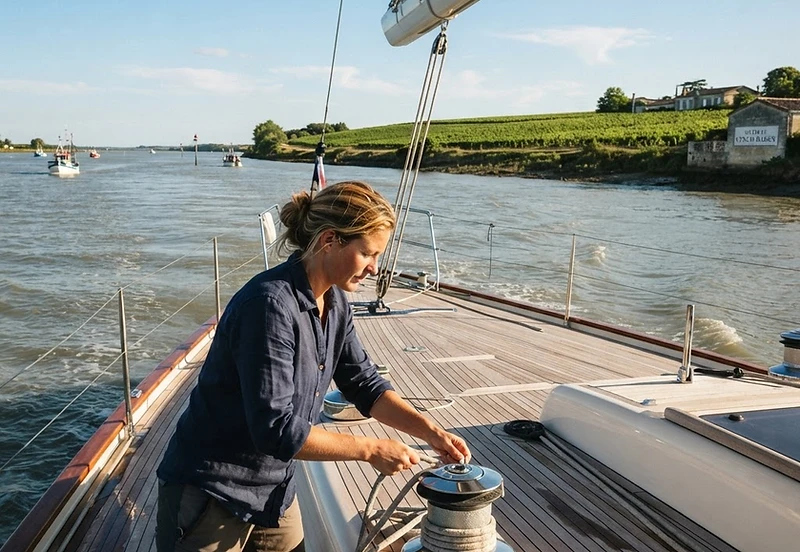
The Atlantic does not surrender its hold on the Gironde easily. To navigate the estuary by yacht is to enter an exacting dialogue with the tidal bore, a rhythmic push and pull that dictates the cadence of our 140-foot Royal Huisman. We hovered off the coast of Royan, waiting for the flood tide to soften the river’s throat. The air here is sharp, carrying a bracing, saline chill from the Bay of Biscay that bites through the warmth of the early afternoon. As the bow swung into the current, the crew moved with the silent, practiced intensity of a well-oiled machine; lines were faked on deck and fenders checked against the mounting chop, the team anticipating the shifting sandbars that guard the passage. On the bridge, the focus was absolute, each degree of heading adjusted to counter the river's relentless, pushing weight.
Following the Current to Pauillac
Navigation on the Gironde is an exercise in profound restraint. There is no luxury in rushing a channel that demands a constant, microscopic reading of the charts. We motored at a steady, low-vibration pace, the engine hum barely registering through the teak of the aft deck as the flat, marshy landscape of the Médoc unfolded in muted shades of silver and deep, river-fed green. By mid-afternoon, the spires of the village churches began to pierce the horizon. We dropped anchor off Pauillac, where the deep-water channel allows a vessel of our displacement to hold her ground within a cable’s length of the stone quay. The tender was deployed, and we crossed the short, choppy distance to the shore. The transition was immediate: the smell of diesel and brine evaporated, replaced by the earthy, concentrated perfume of damp topsoil and the cool, limestone breath of ancient cellars. We were met by a team from Château Lynch-Bages, our arrival timed to the precise, quiet window between the day's heat and the evening's descent.
The Estate and the Evening Glass
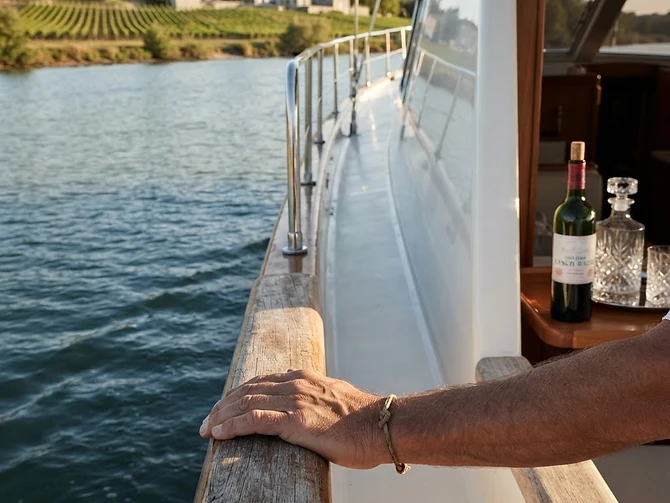
Walking the rows of the vineyard, one observes the same meticulous architecture that defines a well-run galley. Every vine is pruned with a singular intent toward longevity, much like the thrice-applied varnish on our caprails—a quiet, endless pursuit of structural perfection. Inside the cool, subterranean expanse of the cellar, the air felt suspended, thick with the history of the vintage. We tasted a 2010 bottling, its complex, dark-fruit structure a sensory mirror to the precise climate of the Gironde—a marriage of river mist, cooling winds, and sun. Returning to the yacht as the light collapsed behind the western banks, the world seemed to contract into the sheltered space of our own transom. We sat on the aft deck, the water darkening to the deep, resonant color of the wine in our glasses. There was no conversation, only the rhythmic, hollow lap of the river against the hull and the distant, lonely tolling of a channel buoy.
As the lights of the shoreline flickered out, the Gironde returned to its own deep, ancient rhythm, indifferent to our passage, yet holding us within its gentle, steady grip until the morning tide dictated our return to the open Atlantic.






