
The Geometry of the Hull
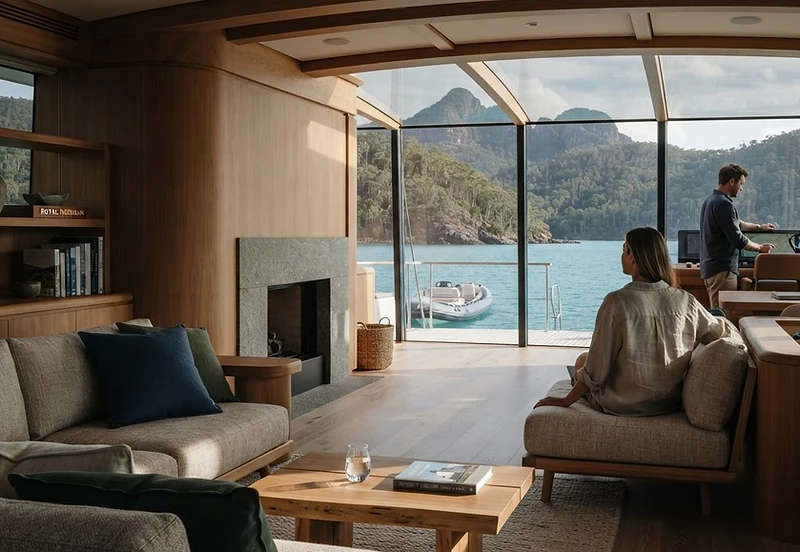
The dawn air in the Whitsundays carries a sharp, saline bite that belies the latitude, especially when you are standing on the foredeck of a 45-metre explorer vessel at four in the morning. As we swung at anchor off the northern tip of Hook Island, the water was a sheet of hammered pewter, reflecting the first bruised purples of a sun struggling to crest the horizon. Stepping inside from the raw, biting wind, the transition is not merely thermal; it is architectural. The interior of this yacht—a custom-built explorer from the yards of Royal Huisman—operates with the same rigorous logic as a modernist cliffside villa overlooking the Tasman Sea. The joinery, a soft-grained cedar polished to a matte finish, absorbs the morning light, turning the cabin into a living space that feels anchored and immovable, despite the gentle, rhythmic lift of the swell against the aluminium hull. It is a space where the hull's engineering serves as the foundation for a quiet, domestic sanctuary.
Refuge in the Southern Lee
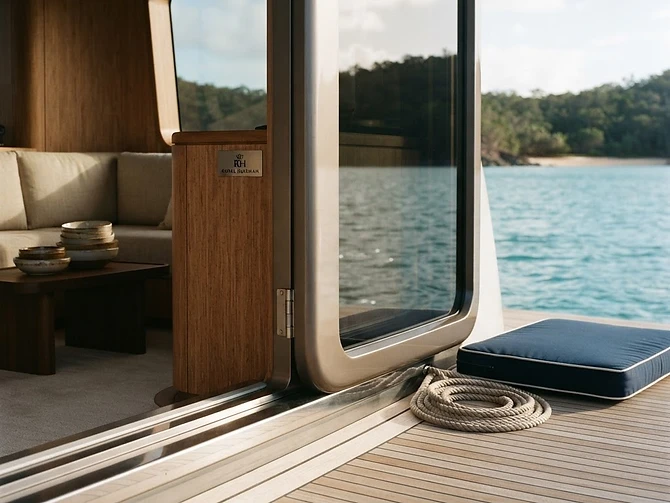
Life aboard an expedition vessel in these waters is defined by the tension between the vast, chaotic reef systems and the ordered serenity of the master suite. Here, the design team has rejected traditional maritime affectations in favour of a restrained, organic palette that mirrors the rugged geology of the nearby Hamilton Island hills. The floor-to-ceiling glazing in the main saloon, framed by thick, structural mullions of brushed steel, functions much like the grand bay window of a residence designed by Glenn Murcutt, pulling the exterior landscape into the heart of the home. When the wind picks up, whistling through the rigging and stirring the surface of the Coral Sea into white-capped turbulence, the cabin remains a vacuum of absolute calm. We sat for hours near the aft bulkhead, nursing dark-roasted coffee and watching the shifting light play across the teak decking, feeling the vessel hold its position with the stubborn, quiet grace of a sentinel guarding the reef.
The Weight of the Horizon
There is a specific, tactile quality to an interior built for the unpredictability of expedition cruising. It is found in the weight of the brass latches, the depth of the cabinetry drawers that lock with a reassuring, mechanical click, and the way the low-profile furniture is weighted to ground the occupant against the sea’s motion. Just as a well-appointed home on the slopes of the Whitsundays must be engineered to withstand the atmospheric fury of the Queensland summer, this yacht acts as a fortress of comfort. By mid-morning, as we prepared to weigh anchor and make the transit toward the calmer, shallow-water reefs of the outer shelf, the interior felt less like a transit vessel and more like a permanent, evolving residence. The ship moved with a fluid, liquid grace, yet inside, among the leather-bound charts and the soft, neutral textiles of the seating area, the atmosphere was one of profound, intentional stillness. As we finally turned the prow toward the open blue, the warmth of the cabin interior lingered in our senses, a stark, comforting contrast to the infinite, salt-scoured horizon closing in behind the stern.






