
The Anatomy of an Approach
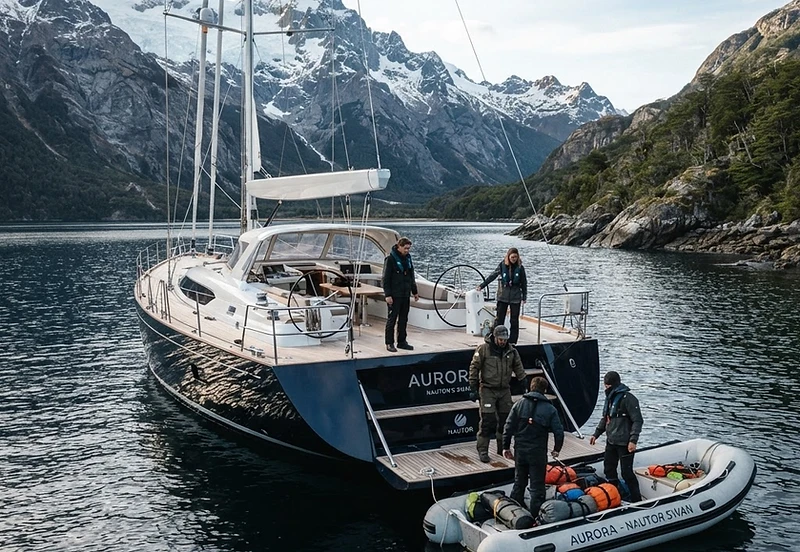
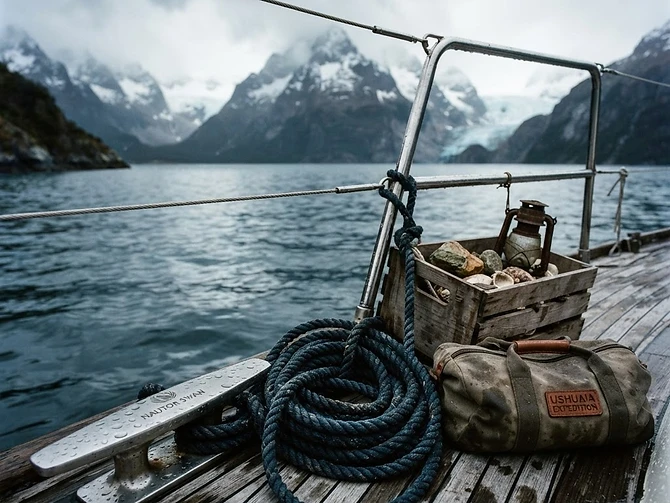
The wind in the Beagle Channel does not simply blow; it tumbles off the glaciers, catching the rigging of our Nautor's Swan with a sharp, insistent hum that vibrates through the deckhouse. To navigate these waters is to negotiate with the elements in their most unforgiving form. We had been anchored for two days in a sheltered bight near Isla Gable, the water a glass-black mirror reflecting the jagged, snow-dusted spines of the Andes. The rhythm of life aboard here is dictated by the barometer and the erratic, glacial katabatic winds that force us to keep a constant, vigilant watch on our anchor chain. When the weather holds, the pull of the shore becomes impossible to ignore—a ritual of transition from the quiet, contained, teak-decked world of the yacht to the ancient, wind-whipped expanse of the Argentine coast. The tender, a 4.5-meter rigid inflatable, sits low in the frigid, nutrient-rich water, its hull brushing against ice fragments that have sloughed off the distant Martial Mountains.
Tender Runs and Terrestrial Bounty
Dropping the tender into the chop feels like a deliberate act of intrusion against the overwhelming stillness of the channel. The spray is needle-sharp, coating our immersion layers in a fine, stinging salt mist as we throttle toward the town of Ushuaia. Pulling up to the quay, the transition is immediate and physical. We leave behind the hum of the generator and the careful, modular order of the galley to step into the robust culinary reality of the Fin del Mundo. Here, the food culture is an extension of the rugged landscape: it is direct, unadorned, and deeply tied to the sea that surrounds us. At La Cantina Fueguina de Freddy, the atmosphere is heavy with the scent of woodsmoke and the briny, iodine-rich perfume of the Southern Ocean, a place where local fishermen haul their gear right up to the back door.
The Ritual of the Southern Plate
We are here for the centolla, the massive Southern king crab that is the signature of these frigid, deep-water channels. Served with a refreshing, matter-of-fact simplicity—boiled in seawater and cracked right there at the scarred wooden table—it is the absolute antithesis of the delicate, overly-manipulated preparations one might find in more temperate, groomed latitudes. The meat is dense, sweet, and firm, tasting precisely of the cold, clean currents that feed the seabed of the Strait of Magellan. Beside it, a thick crust of dark bread baked with local wheat, and a small, earthenware dish of pebre—a vibrant, spicy emulsion of tomatoes, garlic, onion, and cilantro—provides the only bright, acidic contrast to the rich, oceanic intensity of the crab. The chef, who spends his mornings coordinating directly with the small-boat artisanal fishermen, understands that in Patagonia, ingredients are not curated or styled; they are surrendered by the landscape. There is a profound honesty in the way the local kitchen respects the severity of the environment, offering us a meal that defines the region’s sparse, beautiful intensity.
Returning to the yacht as the low sun turns the glaciers a bruised, electric purple, we bring with us the residual warmth of the kitchen and the quiet, heavy satisfaction of a meal that could only exist at this specific, shivering coordinate of the map. As we climb back over the gunwale, the yacht feels like an island once more, a polished, safe cocoon floating in the vast, darkening silence of the south, the residual taste of the sea still bright upon our tongues.






