
The Descent from the Benguela
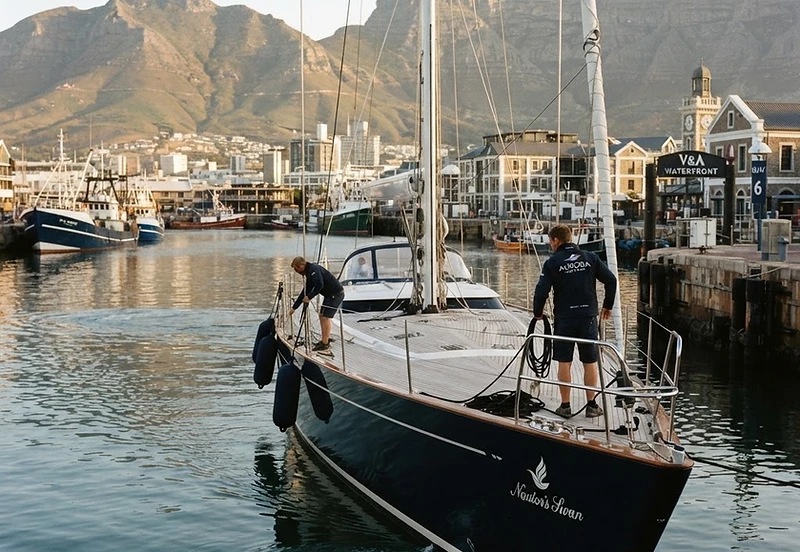
The Atlantic, usually a roiling, dark-blue expanse along the Western Cape, seemed particularly impatient as we brought our 30-metre Nautor's Swan into the shelter of the V&A Waterfront. The journey around the Cape of Storms had been unrelenting; the hull, normally sleek and pristine, was etched with the aggressive, saline calligraphy of the Southern Ocean. There is a singular, melancholic weight to the final arrival of the season. The halyards were already being slackened, the sails shed like tired skin, and the familiar rhythm of the watch — so constant it had become our pulse — began to dissipate into the quiet, industrial stillness of the marina.
As the travel lift groaned into position, the yacht emerged from the water, dripping with the frigid essence of the Benguela current. To see her hanging there, suspended between the mirror of the harbor and the grey, brooding peaks of Table Mountain, is to confront the true anatomy of a vessel. Below the waterline, the clinging presence of barnacles and weed told the tactile history of our passage; above, the teak, silvered by the harsh South African sun, held the quiet memory of a thousand evening sundowners. This is not merely maintenance; it is a ritual of transition, where the vessel is returned to a necessary state of stasis.
The Shorebound Table
With the yacht shored up in the cradle, the frantic urgency of the galley subsides, yielding to the rich, earth-bound culinary traditions of the Cape. We retreated from the dry dock to a corner table at The Pot Luck Club, overlooking the industrious, rattling pulse of the working harbor. The food here is a reflection of the coast’s rugged, multi-layered history: a tapestry of Malay spice, fresh Atlantic catch, and the deep, dark flavors of the interior. We started with locally landed West Coast rock lobster, simply grilled and served with a bright, citrus-forward salsa verde made from preserved lemons and wild herbs gathered from the fynbos-covered slopes of the nearby Peninsula.
The kitchen, understanding the weary state of a crew coming off a long-range cruise, presented a plate of slow-roasted Karoo lamb that yielded to the fork, accompanied by a reduction of indigenous rooibos and local balsamic. It is a meal that grounds you, rooting the abstract, shifting experience of the sea into the tangible, aromatic soil of the land. Dining in Cape Town during this haul-out period serves as a necessary anchor; the sharpness of the local bird's-eye chilies and the sweetness of the Cape’s late-harvested figs act as a restorative counterpoint to the salt-stripped palate of a long passage. We talked little of navigation or weather patterns, focusing instead on the texture of the crusty, sourdough-style bread, the mineral complexity of a cool-climate white from the nearby Constantia valley, and the slow, rhythmic comfort of a meal that required no offshore focus.
The Quietude of the Cradle
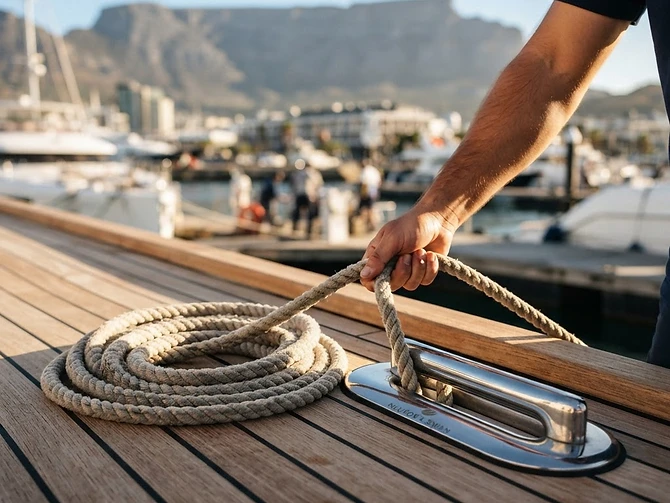
In the final days, the work becomes intimate. The crew, now transitioned into a land-based rhythm, spend their mornings scouring the teak and polishing the chrome fittings until they catch the soft, angled light of the Southern winter. Every locker is emptied, every cushion sun-dried, and every piece of rigging inspected with a surgeon’s detachment. There is a profound honesty in these rituals; one is essentially peeling back the layers of a life lived on the water to prepare for the inevitable sleep of the off-season. As I stood on the ladder, wiping down the stainless railing for the last time, the wind kicked up from the southeast, carrying the faint, bracing scent of kelp and cold, deep-sea water. The mast stood silent against the backdrop of the mountain, a silver needle piercing the clouds. The yacht was no longer a vessel of passage, but a sanctuary of stillness, waiting patiently for the cycle to begin again.






