
The Geometry of the Drop
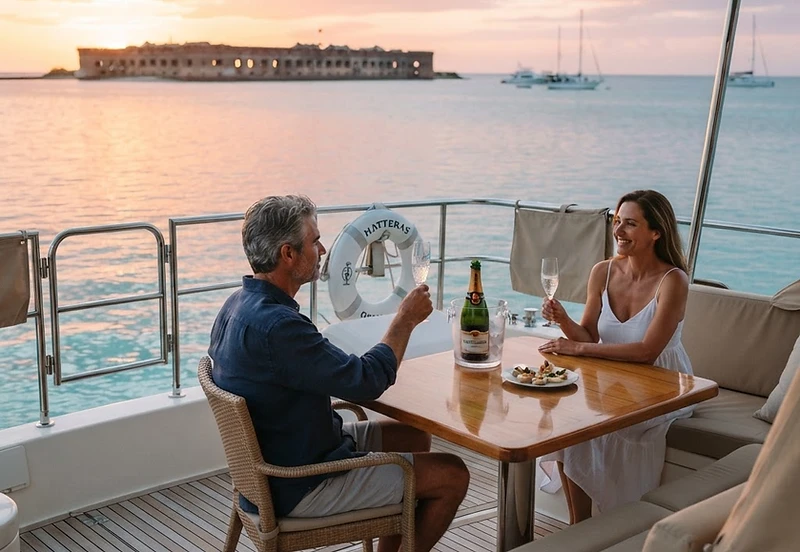
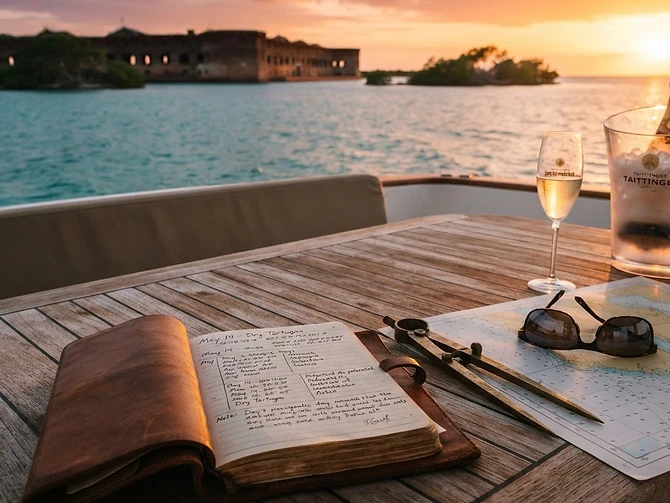
Steering a custom Hatteras through the shoals west of Key West requires a certain surrender to the local bathymetry. The water here is not merely blue; it is a bruised, translucent turquoise that shifts into deep violet as the bottom falls away toward the Gulf. By the time we cleared the last of the markers and made our approach to the Dry Tortugas, the trade winds had died, leaving the surface with the tension of stretched silk. Dropping the hook near Loggerhead Key, we watched the light begin its long, amber descent toward the horizon, the brick ramparts of Fort Jefferson turning to heavy rust in the distance.
There is a specific cadence to securing an anchor in such isolation. Once the chain stop was engaged and the wash-down pump had ceased its low, mechanical thrum, the vessel exhaled. We transitioned from the bridge to the aft deck, moving with the practiced efficiency of a crew that knows exactly when to leave the engines to their cooling. The swim platform, lowered to the waterline, became our evening sanctuary. It is a precarious, beautiful vantage point—close enough to the sea that you feel the rhythmic, sub-surface pulse of the tide against the fiberglass, yet removed enough to host a moment of quiet consequence.
Vintage and Tide
In the galley hold, the cellar temperature is a point of obsessive pride for any captain cruising the Florida heat. We chose a bottle of 2012 Taittinger Comtes de Champagne, a Blanc de Blancs with the necessary structural acidity to hold its own against the lingering humidity of the Keys. As the cork gave way with a sound that seemed unusually sharp in the vast stillness of the anchorage, the ritual began. Pouring the champagne into weighted crystal, we watched the bubbles trace tight, vertical lines toward the surface, echoing the way the light caught the residual wake of the tender that had returned to us moments earlier.
The wine was cold, biting, and precise—a necessary counterpoint to the salt-heavy air and the radiant heat still emanating from the deck. We sat on the edge of the platform, legs dangling inches above the darkening, bioluminescent-ready water, watching the sky bruise into deep shades of plum and ochre. There was no need for conversation. To speak would have been to break the spell cast by the slow rotation of the earth beneath our hull. The champagne, with its signature notes of toasted brioche and sharp citrus, felt like a grounding wire, anchoring us to this specific, fleeting coordinate in the Gulf.
The Final Watch
As the sun dipped below the waterline, the sky flared in a brief, neon magenta before surrendering to the indigo of a southern night. The lighthouse at Fort Jefferson blinked to life, a rhythmic, mechanical pulse that sliced through the dark. On the platform, the glasses sat nearly empty, the last of the bubbles clinging to the crystal like static. We had crossed the straits for this exact intersection of navigational effort and stillness, of sea-hardened engineering and the ephemeral pleasure of a vintage pour. Standing up to head back to the main deck, I could feel the faint, residual vibration of the engines in my boots, a silent reminder that the sea always demands its due, even on the quietest of evenings.






