
The Geometry of the Ice Reach
To drop anchor in the Lemaire Channel is to invite the absolute, pressurized silence of the Antarctic Peninsula into your morning. The water here is not merely a fluid; it is a viscous, ink-black mirror, only fractured by the serrated crystalline edges of bergy bits drifting lazily toward the Southern Ocean. We were positioned aboard a 50-meter explorer vessel, her ice-classed steel hull holding steady against the catabatic winds that occasionally whispered down from the serrated glaciers of Booth Island, cooling the air to a point where every breath felt sharp and medicinal. At this latitude, luxury is not measured in the polished teak of the caprails or the high-thread-count upholstery of the sky lounge, but in the improbable, defiant ability to maintain a terrestrial ritual in a landscape so fiercely, brilliantly elemental.
The Galley’s Antarctic Harvest
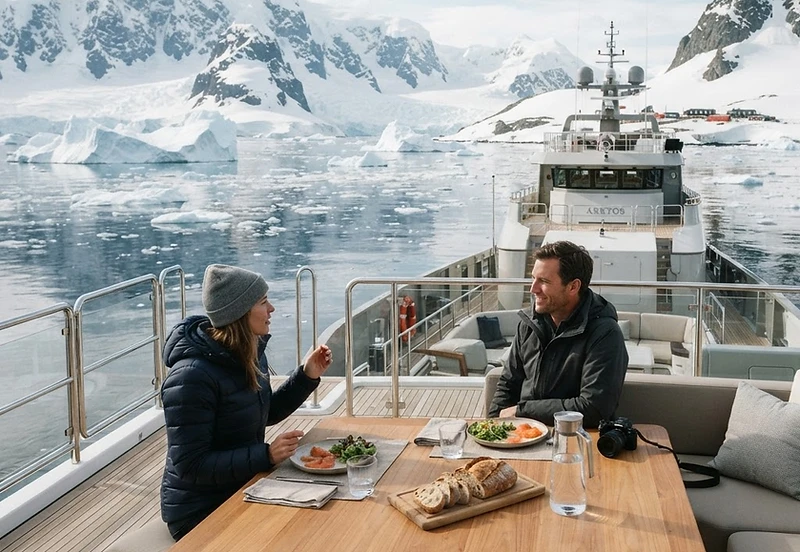
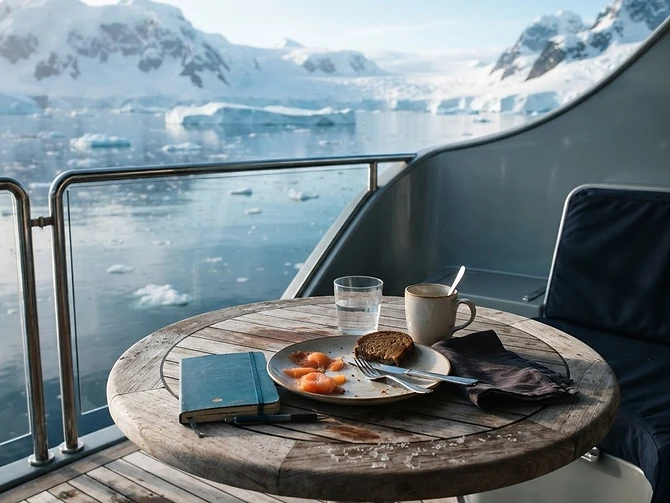
When the sun finally pierced the heavy mantle of stratocumulus clouds—a rare, golden luminescence that suddenly transmuted the surrounding ice cliffs into towering slabs of translucent opal—the aft deck was prepared for a mid-day service. Our chef, having successfully coordinated with a local supply vessel operating out of the historic outpost at Port Lockroy, had secured a fresh haul of Antarctic toothfish. Rather than mask the integrity of the catch, the preparation was intentionally austere: the delicate, oil-rich fillet was pan-seared with only the lightest dusting of sea salt, served alongside a warm emulsion of root vegetables and a vibrant, crisp garnish of foraged sea kale. The meal provided a grounding, earthy counterpoint to the sharp, metallic tang of the air. Dining on deck in the deep south is a sensory negotiation; the salt spray is brittle, the atmosphere is bone-dry, and the table must be stabilized against the sudden, unpredictable currents pulsing through the channel. Eating while watching a solitary crabeater seal haul itself onto a nearby floe serves as a humbling reminder of the precarious proximity we share with this unforgiving, ancient wilderness.
The Long Horizon
The rhythm of our service matched the slow, deliberate drift of the icebergs. There is a peculiar, almost hypnotic comfort in the chime of porcelain against the backdrop of a calving glacier, a sound that carries across the freezing water like a distant rifle shot, echoing deep into the mountain passes of the Peninsula. As the lunch extended, the necessity of conversation fell away, replaced by the collective habit of observation—noticing the subtle shift in the light as the sun tracked low, deepening the impossible, electric blues trapped within the glacial crevices. We watched the distant, rhythmic silhouette of a research vessel ghosting toward the Vernadsky Research Base, their presence a small, blinking reminder of human curiosity in this vast, frozen theatre. As the shadow of the peaks climbed the opposite wall of the channel, the white linen of our table seemed to catch the dying light, glowing against the darkening expanse of the water, a singular, defiant point of order held against the chaotic beauty of the Antarctic drift.
As the final plates were cleared and the wind began to stiffen from the south, signaling the closing of our narrow window of calm, the empty table remained for a few quiet moments—an island of human warmth anchored firmly in a sea of encroaching, beautiful cold.






