
The Architecture of the Open Sea
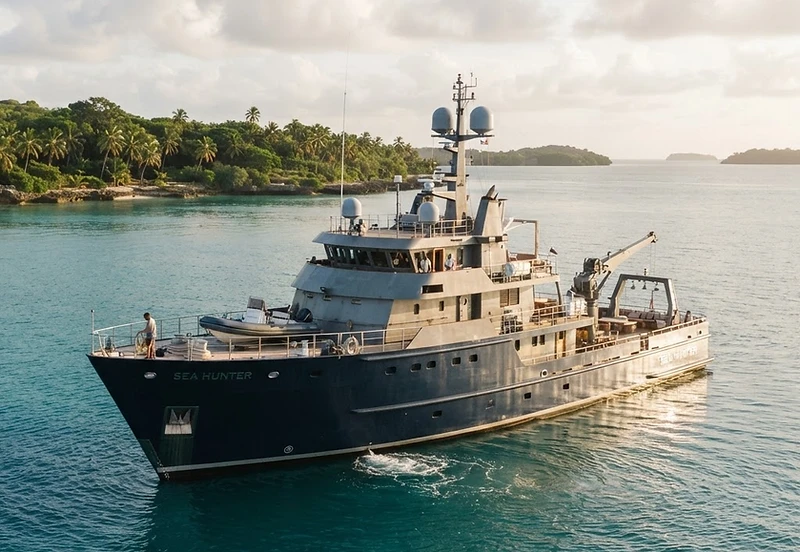
The transition from the exposed deck of an expedition vessel to the saloon is a study in thermal and structural relief. We were anchored off the western coast of Pemba, the swell pushing a persistent, rhythmic groan through the steel hull of the Sea Hunter. Outside, the sky had bruised into a deep, volatile purple, the kind of weather that demands an immediate retreat from the salt-crusted exterior. Stepping through the heavy-duty weather-tight doors, the atmosphere shifted instantly. This is not merely a cabin; it is a residential structure built to move, designed with the same rigorous floor-planning principles found in a cliffside villa in Stonetown, yet calibrated for the relentless motion of the Indian Ocean.
The interior, designed by a firm that typically crafts permanent architecture for the East African coast, eschews the fragile veneers common in leisure yachts. Instead, the focus is on heavy, tactile materials. Brushed teak bulkheads and raw, unvarnished stone countertops create a sense of groundedness. When the boat heels, the house—for that is what it becomes—does not shudder. It sighs. The cabinetry is hand-joined with tolerances that suggest a permanence usually reserved for stone masonry. It feels less like a vessel and more like a floating extension of the Zanzibar archipelago’s storied, carved-door heritage, where the geometry of the interior respects the gravity of the sea.
The Warmth of the High-Latitude Mindset
Life aboard, even in tropical latitudes, requires a psychological warmth. As the monsoon rain lashed against the thick, multi-layered glazing, the saloon felt remarkably enclosed, a sanctuary of soft, diffused lighting and low-slung upholstery. Captain Suleiman had already lowered the stabilizers, turning the vessel into a stable platform that felt as rooted as any building on the mainland. We sat with glasses of fresh hibiscus tea, the steam curling against the cool, climate-controlled air. There is a specific comfort in knowing the difference between the wind’s howl outside and the absolute stillness within.
It is in these moments of forced pause that the interior architecture reveals its true utility. The seating is arranged in a deep-cove configuration, forcing the gaze inward toward a central, low-profile table, replicating the intimacy of a sheltered patio overlooking a private bay. The joinery, heavy with the scent of linseed oil and age-old timber, speaks to a craft that understands the sea’s hostility and chooses to answer it with beauty. This is the art of the expedition vessel: a sophisticated containment of human life, allowing one to inhabit the most remote corners of the Tanzanian coast without ever feeling fully untethered.
As the evening progressed, the storm broke, leaving the sea a flattened, oily black. I watched the masthead light flicker in the reflection of the glass, a tiny, pulsing star in the vast dark. Outside, the current pulled against the chain, the sound muffled by the thick insulation of the bulkhead. We were safe, contained, and entirely at ease. The anchor held, the lights hummed, and the sea continued its long, slow respiration beneath us, indifferent to our small, crafted refuge.






