
The Absence of the Hum
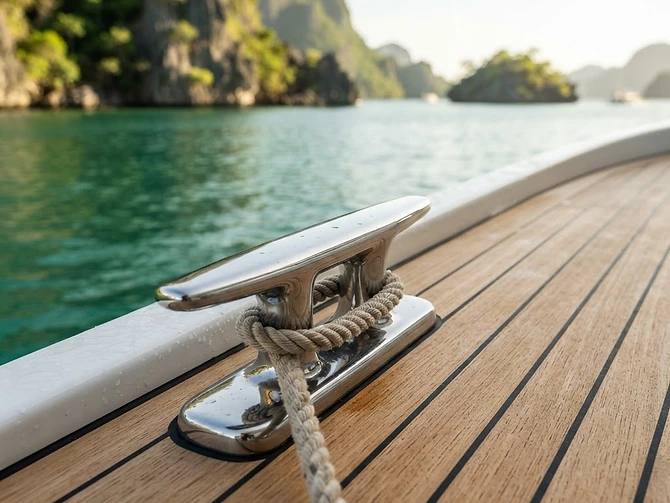
At four in the morning, the Sibuyan Sea is a dark, stilled mirror, unruffled by the trade winds that typically define the afternoon passage toward the Busuanga coast. Aboard our 45-meter Feadship, the usual subterranean vibration that signals a departure—the deep, rhythmic thrum of heavy-duty diesels—is entirely absent. Instead, we pull away from the anchorage at Culion on battery power alone. The experience is disorienting in its purity; the only sound is the water parting at the stem, a liquid murmur that feels less like navigation and more like ghosting. Standing on the teak decking, I can hear the distant, rhythmic slap of swell against the limestone karsts that characterize this reach of the Visayas, a sensory detail usually buried beneath the persistent weight of mechanical exertion.
This shift to electric propulsion represents more than a technical advancement; it is an aesthetic recalibration of what it means to be at sea. When the thrusters engage, they do so with a surgical, controlled precision, allowing the captain to maneuver with a stillness that respects the fragile marine life of the Palawan basin. There is no soot on the white linens of the sun deck, no heavy exhaust to spoil the humid, salt-thickened air of the tropics. We are simply moving, a white hull gliding through the pre-dawn darkness as if drawn by the gravitational pull of the tide itself.
Architecture in the Lee
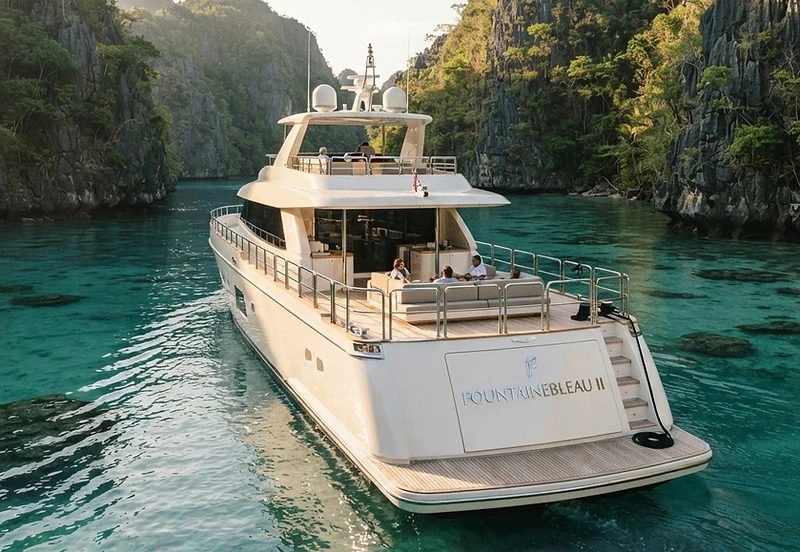
As the sun begins to bleed over the horizon, painting the jagged silhouettes of the islands in shades of bruised violet and oxidized copper, we reach our destination: a remote, private cove sheltered by towering, weather-sculpted limestone cliffs. The yacht anchors here, effectively functioning as a residence afloat; its design echoes the rigid, vertical geometry of the surrounding rock. The architect of the vessel’s interior sought to mirror the local vernacular—low-slung, horizontal lines that sit parallel to the water's surface, intentionally contrasted with the vertical ambition of the cliffs we face. Inside the saloon, the bleached oak joinery and open, airy layout allow the morning light to pour through floor-to-ceiling glass, blurring the boundary between the internal comfort of the vessel and the raw, verdant sanctuary of the shore.
We take the tender—its own electric motor a silent partner in this journey—to a private beach club built into a natural cave formation at the water's edge. Here, we share a meal of freshly caught snapper, grilled simply with calamansi and sea salt, served on a heavy mahogany table that feels as if it were carved from the island itself. The contrast is stark: the yacht, a masterclass in modern, quiet engineering, sits just off the shallows, appearing as an extension of the cliffside residence we currently inhabit. The line between the vessel’s engineered serenity and the island’s ancient stillness has effectively vanished.
Back on board as evening settles, the air is heavy with the scent of damp earth and distant woodsmoke drifting from the fishing villages of northern Palawan. I watch the bioluminescence stir in our wake, a fleeting, neon pulse that only becomes visible when the engines remain dormant. There is a profound finality to the day, not signaled by the clang of steel or the roar of iron, but by the soft, steady hum of energy returning to the battery banks as the yacht rests, perfectly aligned with the slow rotation of the archipelago.






