
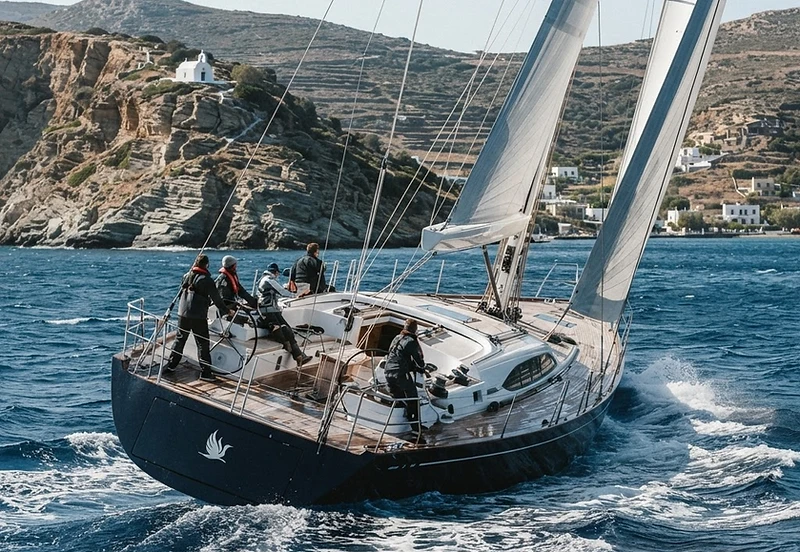
The meltemi had been blowing with a relentless, parched intensity for three days, pinning our 90-foot Nautor’s Swan against the leeward shelter of Folegandros. When the wind dictates the choreography of a voyage, the vessel itself becomes a sanctuary of compression and intent. There is a specific, bracing clarity to the morning at anchor here; the scent of sun-baked shale and wild thyme drifts out over the water, mingling with the sharp, honest aroma of high-grade marine teak oil and the grounding presence of a double espresso from the galley. We watch the local caiques, their hulls scarred by years of Aegean service, dancing through the white-capped chop, bringing the morning’s bounty to the small quay below. Life aboard is defined by this rhythm: we are not fighting the conditions, but recalibrating our passage to meet them.
The Dialogue of the Galley
In the Cyclades, the culinary landscape is written in the language of scarcity and persistent, biting salt. By mid-morning, our chef is already in negotiations at the local market, securing a haul of fresh gouna—mackerel caught at first light, split, sun-dried, and finished with regional sea salt and mountain oregano. It is a ritual that feels as ancient as the navigation charts we study over our mid-day coffee, mapping our next hop toward the Sifnos coast. Back in the galley, the transformation is a matter of technical precision: the fish is lightly charred over an open flame, the smoke punctuating the clean, saline air of the saloon. We serve it with a salad of vine-ripened tomatoes and capers foraged from the arid hillsides, an earthy, metallic tang that grounds our palate in the volcanic geology of these islands. The ingredients are not merely food; they are a manifestation of the island’s ability to survive and, in turn, sustain us.
Anchorages and the Evening Ritual
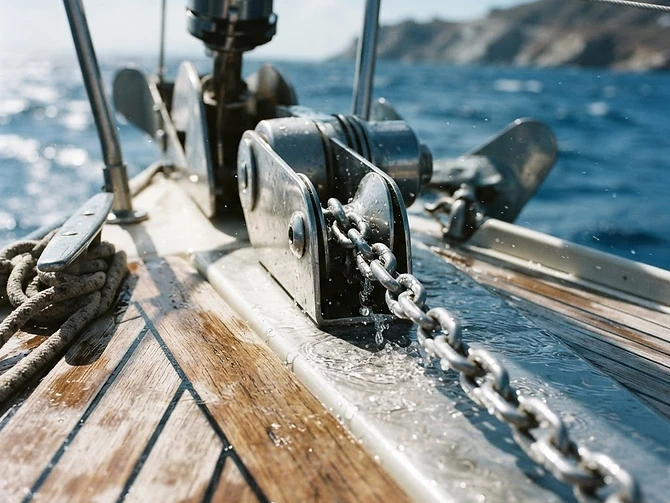
As the sun begins its slow, orange descent behind the volcanic peaks, we weigh anchor, ghosts of the wind guiding us toward a more secluded bight in Sifnos. We approach the anchorage at Vathi by tender, the four-stroke engine barely a hum against the gathering hush of the evening. Here, the transition from sea to shore is seamless, a quiet negotiation between the hull and the seabed. We step onto the sand at Omega3, a modest, celebrated establishment where the focus remains steadfastly on the water’s edge and the integrity of the harvest. We dine on local sea urchin and raw scallops, the sweetness of the shellfish sharpened by a splash of local citrus and the bitter bite of wild greens plucked from the island’s interior. It is an experience defined by proximity—to the seabed, to the season, and to the quiet, mechanical heartbeat of our vessel waiting in the bay, swinging precisely on her chain.
We return to the deck under a canopy of stars that seem to mirror the navigational lights flickering across the Aegean. There is a profound finality to the day’s end here, a sense that we are not merely passing through these islands, but existing within their specific, rugged gravity. The deck cools underfoot, the rigging hums a low-frequency song in the breeze, and we tuck the day’s position and passage into the log, the taste of salt still bright and lingering on our lips, waiting for the wind to shift with the dawn.






