
The Geometry of the Approach
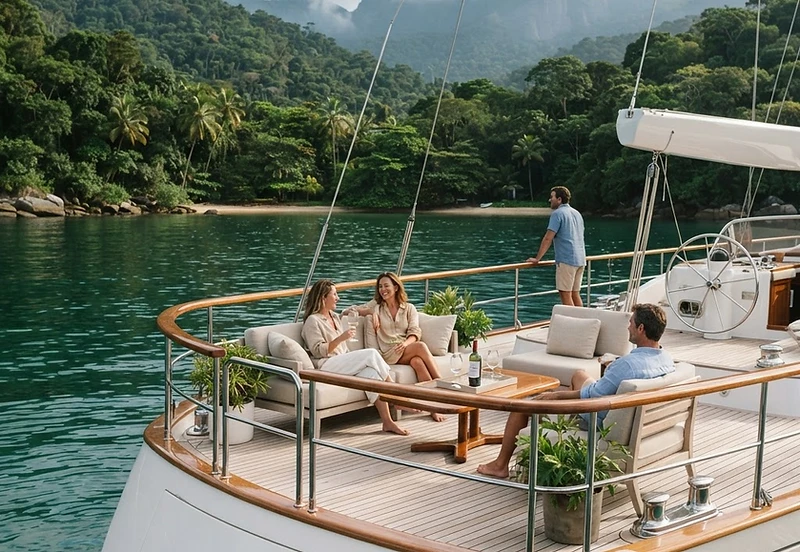
Steering a 45-meter Perini Navi through the narrow, emerald-shadowed channels of Ilha Grande Bay requires a specific kind of patience. The currents here are rhythmic, dictated by the dense, forested mountains of the Mata Atlântica that plunge directly into the Atlantic, creating a topography that feels more ancient than the navigational charts suggest. As we rounded the headland near Saco do Céu, the vessel slowed, the hydraulic winches emitting only a soft, mechanical sigh as we prepared to drop the hook in the lee of the island. There is a profound, quiet luxury in the act of securing a vessel in such a place—the transition from the tension of a complex coastal passage to the absolute, meditative stillness of a protected cove. One can feel the hull settle against the tide, the anchor bite into the soft seabed, and the sudden cessation of the engine’s drone, replaced by the rhythmic slap of water against the waterline.
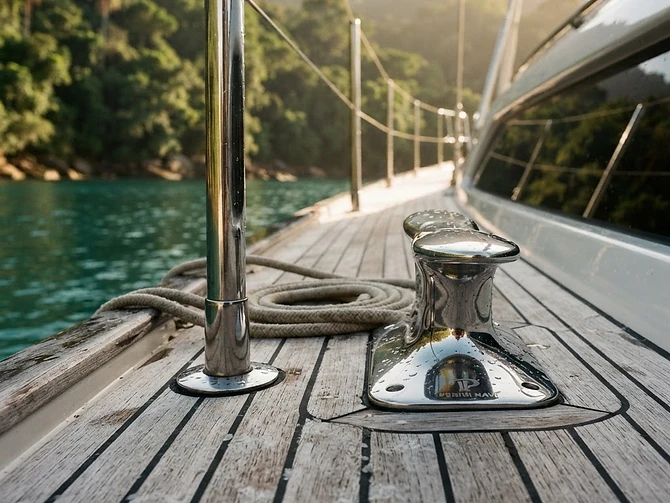
We were six days into a charter, moving with the slow, deliberate pace of those who have surrendered their itineraries to the wind. The crew moved with that practiced, near-silent efficiency that defines a truly well-run deck—a choreography of fenders, lines, and communication that makes the complexity of 150 feet of aluminum look effortless. On the aft cockpit table, cooled by the persistent trade winds, sat an open bottle of Château Montrose—a nod to the Gironde, brought aboard in anticipation of this specific anchorage. It is a peculiar, wonderful dissonance: the salt-crusted teak beneath our feet, the humidity of the Brazilian rainforest surrounding us, and the dark, structured fruit of a Saint-Estèphe estate waiting in our glasses. The wine serves as a bridge, a concentrated memory of distant gravel banks brought into the humid embrace of the southern hemisphere.
Reflections on the Aft Deck
By sunset, the water in the bay had turned to black glass, reflecting the dense, towering silhouette of the Brazilian shore. Our steward, a man who understands that timing is as critical as service temperature, decanted the wine as the light failed. There is a precise vocabulary to wine when it is consumed at sea; the sharp tang of the salt air seems to strip away the pretense, leaving only the clarity of the mineral structure. We spoke of the Gironde, of the ancient gravel beds of Pauillac, and the way the maritime influence shapes those vines—tempering the heat, refining the tannin—just as it shapes the teak and stainless steel of our own environment. It was a shared, unspoken understanding that both viticulture and professional yachting are, at their core, long-term struggles to capture the fleeting essence of a place.
Later, the captain joined us for a brief moment of respite on the aft deck. He spoke of the difficulty of maintaining a high-level cellar while navigating remote coastal regions, but he admitted that the challenge of sourcing the exceptional—be it a rare vintage or the freshest local snapper caught by the artisanal fishermen of the bay—is precisely what keeps the spirit of the charter alive. There is a unique intimacy to these moments, where the boundary between the vessel’s interior and the vast, untamed landscape outside begins to blur. We finished the bottle while watching the bioluminescence pulse in the wake of the tender, a soft, ethereal light that matched the quiet gravity of the evening, reminding us that we were mere guests in an ecosystem far older than any ship.
The following morning, the anchor chain rumbled up through the hawse pipe with a heavy, final sound, marking the end of our sanctuary. The sun crested over the ridgeline, lighting the canopy in a brilliant, piercing gold. As we engaged the engines and began our slow exit toward the open horizon of the Costa Verde, the empty bottle remained on the counter, a solitary witness to the previous night’s quiet equilibrium. The rhythm of the passage resumed, the vessel finding its line through the swells, leaving only a fading white wake on the dark, vast water, soon to be swallowed by the scale of the sea.






