
The Geometry of the Anchorage
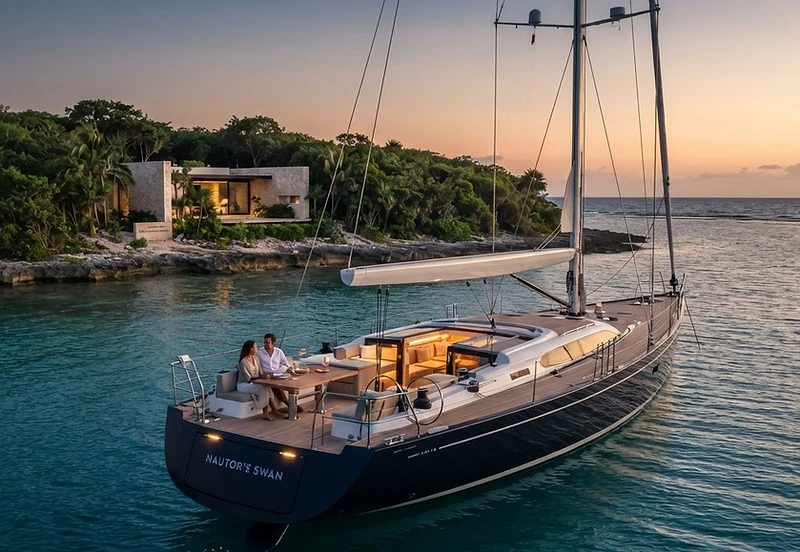
The transition from the salt-sprayed cockpit of our Nautor’s Swan to the stillness of the library saloon is always a measured affair, a ritual of shedding the raw energy of the sea for the tempered calm of the interior. We had spent the morning navigating the shallow, electric-blue drifts off the Riviera Maya, finding our way through the reef-strewn approach to settle the hook in the crystalline shelter beneath a limestone promontory just south of Tulum. From the deck, the view is dominated by Casa Kaan, a masterwork of residential architecture designed by the firm Seijo Peón. Its bold, exposed concrete volumes and expansive, floor-to-ceiling glass pavilions are canted with intent toward the sea, bridging the jagged gap between the rugged coastal scrub and the Caribbean surf. The house rests upon a plinth of native limestone, its terraced levels appearing to slide almost imperceptibly into the water, while a long, polished timber pier stretches out like a beckoning finger, cradling a sleek tender as if the home itself were physically reaching toward our own vessel, tethered in the blue depths below.
The Library Saloon in Twilight
Stepping inside the saloon, the heavy, humid heat of the tropics is instantly replaced by the cool, cedar-paneled embrace of the library. Here, the interior design—characterized by warm, hand-rubbed mahogany cabinetry and recessed, soft-warm lighting—creates a cocoon that feels entirely insulated from the rhythmic slapping of the Caribbean swell against the hull. There is a specific, tactile pleasure in selecting a volume from the shelves while the yacht holds her position, the anchor chain acting as a firm, subterranean anchor in the seabed. The sound of the wind, softened by the vacuum-sealed bulkheads, becomes nothing more than a low, insistent hum, a phantom reminder of the vast, shifting expanse lying just inches away. A glass of mineral water, beaded with fine droplets of condensation, sits on the brass-inlaid table, the liquid mirroring the deep, dark tones of the leather-bound spines that line the bulkheads surrounding us. Time slows here; the frantic navigation of the morning is traded for the static, meditative weight of a quiet evening at anchor.
The Dialogue of Shore and Sea
Outside, the architecture of Casa Kaan undergoes a subtle, nocturnal transformation as the light shifts from gold to bruised indigo. The recessed, perimeter-lit eaves of the villa begin to pulse with a faint, warm glow, casting long, geometric shadows against the weathered limestone cliffs. Viewed from our position in the anchorage, the house and the yacht share a common language of structural intent—both are engineered to facilitate a life lived in absolute proximity to the water, where the threshold between interior shelter and the wild, untethered sea is constantly being negotiated. We watch from the saloon window as the villa's infinity pool seems to dissolve into the dark band of the ocean, a fluid, seamless horizon that binds the terrestrial hearth of the residence to the nomadic, floating refuge of our boat. It is a moment of profound stasis, a long, languid evening where the only motion is the slow, deliberate turn of the yacht as the tide breathes beneath her, keeping us in constant, silent communion with the shore.
As the stars begin to punctuate the obsidian expanse above the jungle canopy, the library settles into the deep, absolute silence of the midnight watch. The anchor chain remains heavy and taut, a simple iron link between our floating study and the ancient, limestone pulse of the Mexican coast, holding fast until the dawn light dictates our next reach.






