
The Geometry of the Deepest Indigo
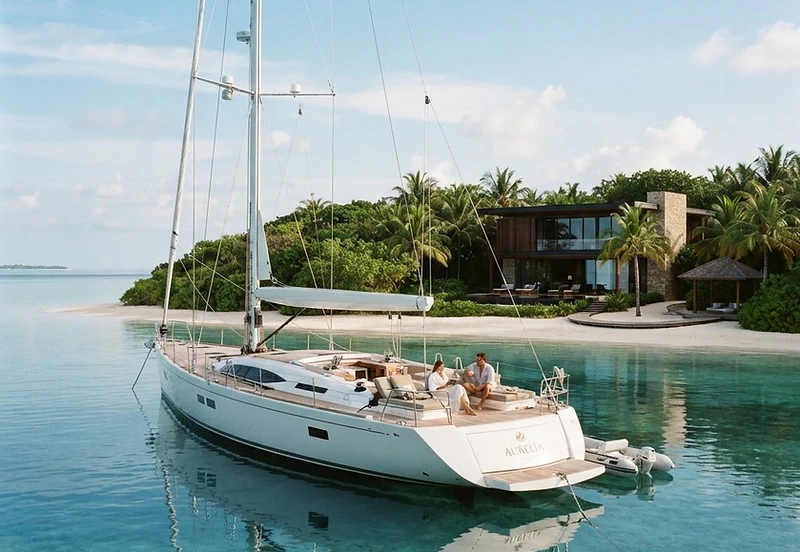
There is a specific temperature to a Maldivian evening, a lingering heat that the water seems to absorb and hold long after the sun has dipped below the horizon of the Baa Atoll. We were anchored in the sheltered lee of a private island, our 42-metre Nautor's Swan, Aurelia, swinging lazily on a single hook. The motion was so subtle, so rhythmic, that the yacht felt less like a vessel and more like a permanent extension of the seabed. Below deck, the library saloon is stripped of the nautical artifice found elsewhere; it is a sanctuary of book-matched walnut and linen-wrapped bulkheads, designed not for transit but for the deliberate suspension of time.
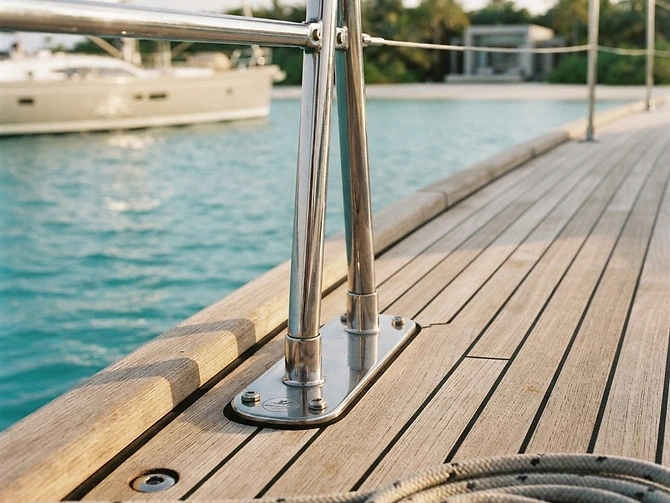
As the light faded to a bruised violet, I found myself tracing the transition from our teak decking to the stark, architectural lines of the nearby residence. The villa, designed by a firm known for its modernist interpretation of tropical vernacular, sat perched on the limestone shelf of the beach. Its cantilevered timber roof, draped in local thatch, mirrored the clean, sweeping lines of our own teak overhangs. The house was a masterclass in transparency: walls of frameless glass blurred the distinction between the curated interior and the chaotic, shifting textures of the coral sand shore. Watching the warm, diffused glow of the house's recessed lighting spill onto the water, I felt the symmetry between our life afloat and the life anchored to the sand.
The Architecture of the Salt-Bound Study
Inside the library saloon, the smell of aged paper mingled with the faint, metallic tang of the sea air circulating through the high-volume ventilation. It is a sensory collision that defines long-haul cruising in the Indian Ocean. My task was simple: a half-finished volume of maritime history, the gentle percussion of the tender bumping against the stern, and a glass of chilled mineral water. The architecture of the room, with its low, library-style cabinetry and deep, oversized armchairs upholstered in heavy cotton, provided the kind of physical containment that is essential when the world outside is nothing but an infinite, dark horizon.
Through the portholes, the villa's private dock extended like a finger toward us, a structure of weathered ironwood that looked as if it had been bleached by a thousand tides. A smaller, centre-console tender was secured there, tugging gently at its lines in the same slow cadence as Aurelia. It was a curious dialogue of design; the residence had been built to capture the sea, while we had built the yacht to host the comfort of the land. We were separated by a few hundred yards of turquoise void, yet we were bound by the same architectural intent: the desire to remain perfectly still while surrounded by the most fluid environment on earth.
The evening deepened, the sound of the Indian Ocean swell pressing rhythmically against the hull, a low thrumming that anchors the soul. We did not switch on the main overheads; instead, the focused glow of the brass reading lamp carved a small, private theatre out of the night. On the shore, the villa’s lights dimmed in unison, a silent acknowledgement of the hour. There is no urgency in the Baa Atoll, only the slow turning of the tides and the weight of a good book. As I turned the page, the anchor chain settled with a faint, metallic groan, a reminder that though we might be lost in prose, we remained, quite literally, held by the sea.






