
The Geometry of the Atlantic
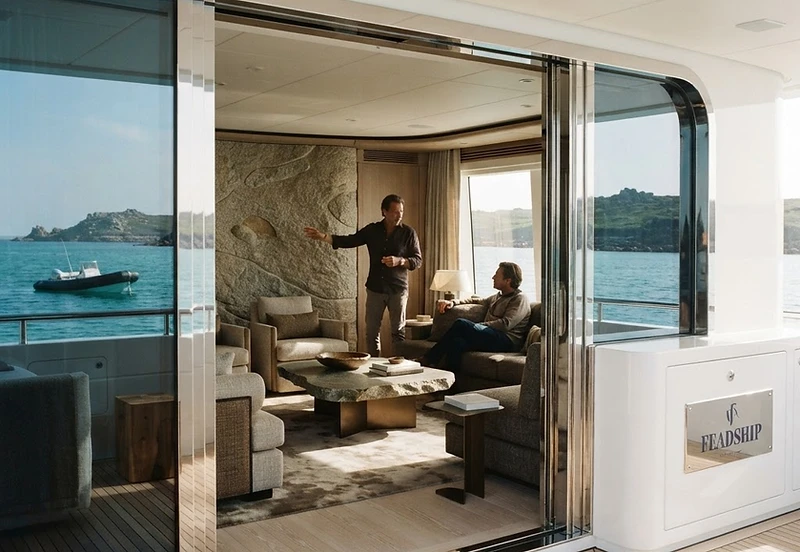
The morning off St. Mary’s Pool is rarely silent. Even in the height of the summer season, the Atlantic swell makes its presence known, rhythmic and insistent against the hull of the Lady Sarah, a fifty-metre Feadship that sits with the quiet authority of an island at anchor. Inside, the main saloon feels less like a vessel’s lounge and more like a cliffside dwelling, suspended between the iron-grey sky and the churning turquoise of the Scilly shallows. Interior designer Martin Kemp has stripped away the vernacular of the traditional nautical cabin—there is no mahogany veneer here, no ornate brass bulkhead lamps—replacing them with a sequence of soft, sand-toned textiles and bleached oak joinery that mimics the textures of the nearby granite outcrops. It is an exercise in continuity; when one looks out the vast, floor-to-ceiling windows, the interior palette simply dissolves into the coastline, turning the cabin into an extension of the rugged archipelago.
The Architecture of the Hearth
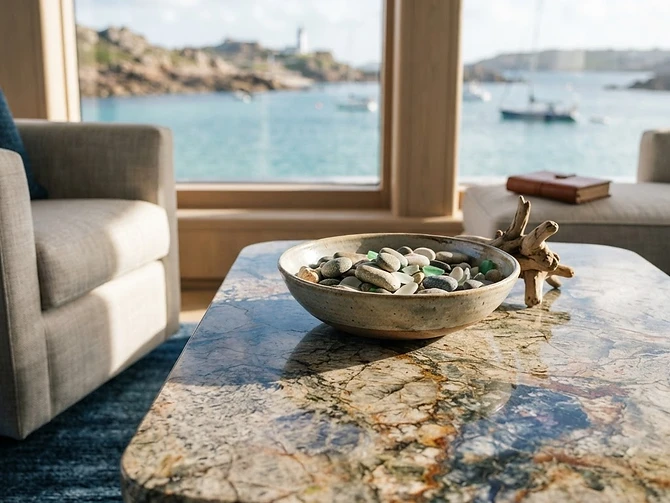
Stepping from the teak aft deck into the saloon, the transition is tactile. The air inside is cooler, scented faintly of sea salt and the sharp, clean aroma of freshly ground coffee, a distinct contrast to the biting spray of the tender ride back from the quay at Hugh Town. We take our seats on a custom-built low-profile sofa, its geometry echoing the gentle, wind-swept slopes of the dunes on Tresco. This is the house afloat, a concept refined through long, technical conversations with the naval architects. Every cabinet is anchored with the same structural precision one might find in a residence overlooking the sheltered waters of the Helford River; the drawers are lined in silent, magnetic-latch silk, and the central table—a singular slab of honed local granite—possesses a weight that grounds the room even as the hull shifts beneath us. It is an interior that refuses to compete with the sea, opting instead to frame it. I watch as the captain monitors the tide; the light shifts, catching the silver-leaf ceiling panels, which mirror the flickering, mercurial patterns of the water passing beneath us, blurring the line between the reflected sky and the moving tide.
Equilibrium at Anchor
Lunch arrives—a simple plate of diver-caught scallops harvested from the cold, deep reefs off Bishop Rock, prepared by a chef who treats the vessel’s galley with the same reverence an architect shows a structural foundation. There is a singular pleasure in being aboard a craft that feels this settled, this intentional. The design here is not merely about aesthetic grace; it is about the physical reality of living in a place that moves with the rhythm of the planet. As the tide turns and the Lady Sarah begins to swing on her anchor chain, the saloon maintains an absolute, serene equilibrium. The space functions as a sanctuary, a point of stillness against the wilder, unpredictable temperament of the English Atlantic. Watching the distant, pale lights of the harbour flicker into existence as evening draws in, I am struck by how effortlessly the design allows the boundary between the salt-sprayed deck and the sheltered interior to vanish. It is a quiet, profound mastery of space, ensuring that even miles from the mainland, the vessel remains a home that respects the power of the water it calls upon.






