
To sail the Adriatic is to engage in a dialogue with a landscape defined by the movement of water and the persistence of limestone. As one navigates the labyrinthine archipelago of Dalmatia, the horizon is punctuated by the elegant masts of classic ketches and the silhouettes of modern cruisers alike, all seeking sanctuary among the terraced slopes of islands like Hvar and Korčula. Here, viticulture is an act of defiance against the harsh, salt-laden wind. Vines are rooted in white karst stone and fed by the mineral-rich spray of the Adriatic, creating a terroir shaped by the maestral—the cooling afternoon breeze that tempers the Mediterranean heat and lends the local whites a characteristic, salt-licked finish that is impossible to replicate inland.
The Maritime Vine and the Karst
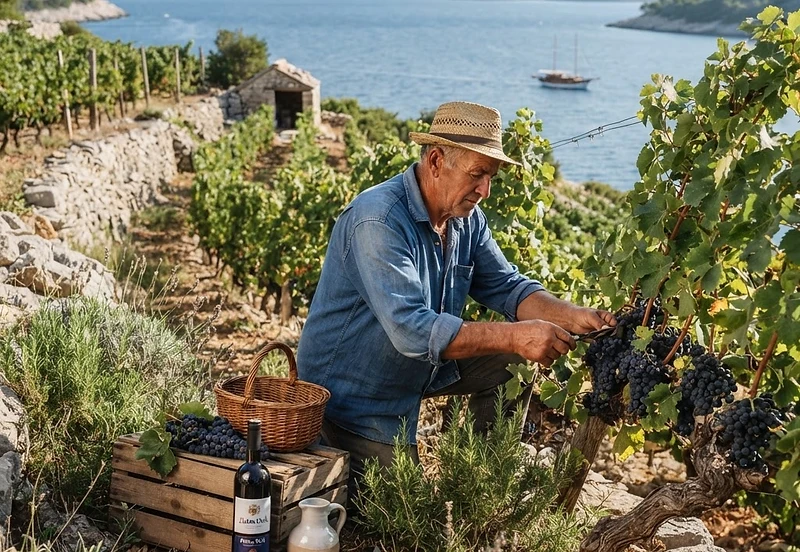
Steering a 50-foot vessel into a hidden bay near the Pelješac Peninsula, the contrast between the deep, navy blue of the sea and the blinding white of the limestone cliffs is absolute. It is here that the indigenous Plavac Mali thrives, clinging to hillsides that seem too precipitous for anything to take hold. On a Tuesday morning, I recall stepping off the tender onto a small, weathered concrete jetty, the air thick with the scent of pine needles and dried rosemary. An elderly grower gestured toward a terraced slope where the soil looked more like fractured rock than earth, explaining that these vines had been tended by his grandfather with nothing more than a hoe and immense patience. This is the raw material of the Adriatic: a stubborn, sun-drenched resilience that transforms the elements into something profound.
A Cellar Beneath the Sails
The true pleasure of a yachting voyage in this region lies in the ability to bridge the gap between the ship’s galley and the shore’s cellar. There is a distinct, rhythmic ritual to this life. You navigate by the wind, anchor in a quiet bight, and then set out to find the source of the evening’s accompaniment. At a small, family-run estate tucked away in a village accessible only by a winding track or a short walk from the marina, you find production that remains intentionally, fiercely small-scale.
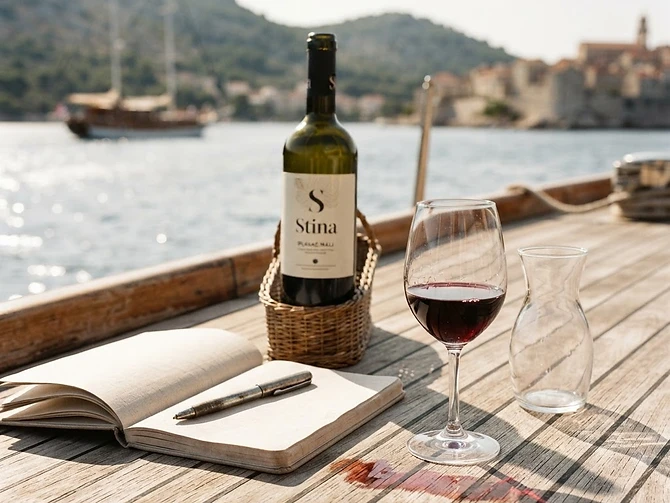
The wine tastes of the place because the place is defined by the wine; every glass carries the austerity of the karst and the warmth of the sun.Tasting a robust, dark-fruited Plavac Mali on a stone terrace overlooking the bay provides a sensory context that a bottle opened in a formal dining room can never match. The wine is rustic yet elegant, mirroring the dual nature of the Adriatic itself—wild at sea, cultivated on land.
The Quiet Equilibrium of the Anchorage
As evening falls and the boat swings gently at anchor in a secluded cove near Vis, the connection between the maritime journey and the land’s bounty feels complete. The transition from the deck to the table is seamless, a quiet ritual of uncorking a vintage sourced just a few miles astern. The cockpit becomes a private salon, bathed in the soft, bruised purple of the Adriatic twilight. There is an undeniable luxury in this isolation—the soft light reflecting off the ripples against the hull, and the knowledge that the liquid in the glass was nurtured by the very air one has been breathing all day. This is the art of living well: a deliberate slowing of the pulse to match the steady, rhythmic wash of the tides.
Ultimately, the Adriatic offers more than just navigation; it offers a profound perspective on heritage. By following the currents, one uncovers a history of resilience in the form of grapes, stone, and craftsmanship that continues to thrive in the face of modernity. To sail here is to understand that the finest vintages are not merely stored in a cellar; they are lived, felt, and remembered, one anchorage at a time.






