
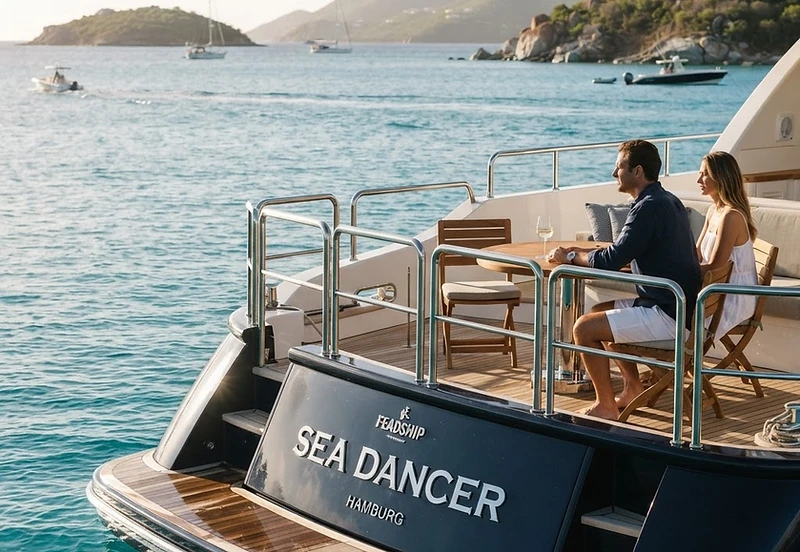
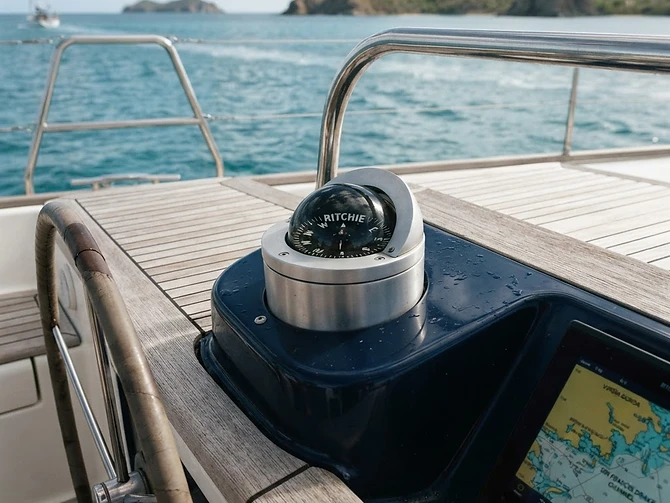
To board a high-performance catamaran in the Virgin Gorda basin is to accept a particular kind of spatial logic, one that defies the traditional nautical expectation of the heel. Unlike the monohull, which leans into the wind with a visceral, kinetic dip, the multihull platform demands a flat, horizontal existence, forcing a thoughtful reconsideration of how one occupies space at sea. Here, the living quarters are not compressed by the rigid demands of keel-weight, but expanded across a generous, bridge-deck breadth that privileges lateral stability over the sharp, aggressive tilt of traditional sailing. It is a serenity born of geometry, where the vessel rests as easily as a leaf upon the surface of the Bight.
The Geometry of the Trade Winds
The passage between Tortola and the northern reaches of Anegada provides a masterclass in elemental navigation. There is an unmistakable rigor to the way these vessels move through the Sir Francis Drake Channel; they do not cut the water so much as skim its surface tension, propelled by the consistent, low-frequency hum of the trade winds. Underfoot, the forward trampoline serves as a porous boundary between the occupant and the rising swell, a thin, woven membrane that transforms the act of transit into a direct, shared experience with the salt and the tide. Standing there at dawn, with the spray cooling the skin and the sun beginning to ignite the hazy line of the horizon, the separation between vessel and environment begins to blur. One feels the heartbeat of the hulls beneath them, a rhythmic cadence that makes the frantic pulse of life ashore feel like a distant, irrelevant memory.
Domesticity in Flux
Life aboard remains a lesson in intentionality. The galley opens seamlessly onto the aft deck, effectively dissolving the threshold between the interior cabin and the cockpit. This layout is not merely an aesthetic choice but a structural necessity that mirrors the region's eternal, temperate climate. Within this frame, one finds a profound clarity: the absence of clutter is not a design preference, but a requirement of the ocean's kinetic energy. Books, heavy crystal glasses, and starched linens must find their gravitational home before we clear the mooring buoy, creating a tactile rhythm to the day that centers on the stowage of objects and the deliberate maintenance of order.
I recall a particular morning anchored off the Bitter End Yacht Club, watching the crew prepare a simple breakfast of sliced papaya and dark-roasted coffee. The silence was absolute, broken only by the gentle slap of water against the fiberglass hull. There is a refined peace in the way a catamaran settles into its surroundings; it is a vessel that demands little and gives back an immense sense of equilibrium.
The horizon is not a destination but a variable; it remains a consistent, horizontal anchor against which all movement is measured.
As evening falls, the anchorage at Peter Island clarifies the relationship between structure and environment. The light flattens, turning the water into an obsidian mirror that reflects the angular geometry of the vessel. In this silence, the catamaran ceases to be a machine and becomes an extension of the geography itself, a temporary architecture tethered to the reef by nothing more than a chain and the patient pull of the moon. Ultimately, the luxury of the charter lies in the restraint it imposes upon the traveler. Removed from the mainland’s terrestrial pace, one discovers that the most refined experiences are often those where human artifice rests lightly, allowing the vast, indifferent movement of the sea to dictate the terms of the day.






