
The Folding Threshold
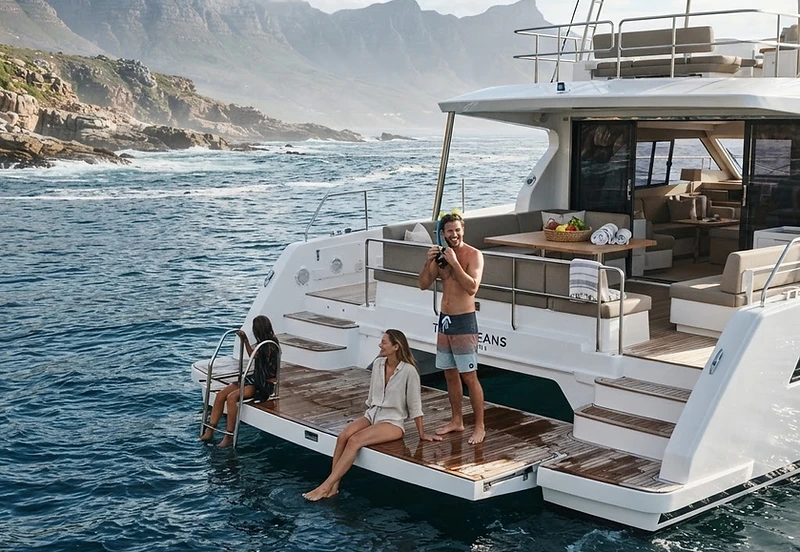
Rounding the formidable, fog-wreathed silhouette of Cape Point, where the relentless Atlantic swells collide with the warmer, nutrient-rich currents of False Bay, the sheer scale of the landscape can feel overwhelming. Yet, standing on the aft deck of a 60-foot power catamaran—a vessel engineered with the hydrodynamic precision synonymous with the Cape Town yard Two Oceans Marine—the experience is one of intimate, almost tactile proximity to the sea. The vessel’s transom, a sophisticated hydraulic-actuated platform, does far more than provide efficient tender storage; it serves as a true kinetic beach club. At anchor in the quiet lee of Llandudno, with the Twelve Apostles range casting long, violet shadows across the water and the mountain air smelling faintly of fynbos, the platform descends to kiss the surface. It is a seamless transition, transforming the yacht from a sovereign vessel into an immediate extension of the granite-strewn shoreline.
The Gastronomy of the Cape
This fluid boundary between the yacht and the Atlantic is best experienced through the lens of the local palate. Life aboard a catamaran in these latitudes demands a rhythm dictated not by the clock, but by the wind and the early morning harvest. Before the southeasterly 'Cape Doctor' begins to whistle through the rigging, our chef returns from the weathered, salt-crusted docks of Kalk Bay Harbour, where the morning haul remains glistening in the crates. In his woven baskets, he carries the day’s prize: succulent West Coast rock lobster and fresh snoek, its iridescent, silvery skin still reflecting the pale light of dawn. Back on the submerged transom, we prepare a lunch that honors the rugged terroir of the Cape. The chef grills the snoek over smoldering vine embers, basting the firm, oily flesh with a vibrant apricot glaze—a nod to the region's historical culinary fusion—while side dishes of charred sea lettuce and the sharp, fermented bite of traditional bokkoms provide the essential, saline seasoning of the deep Atlantic.
A Ritual of the Tide
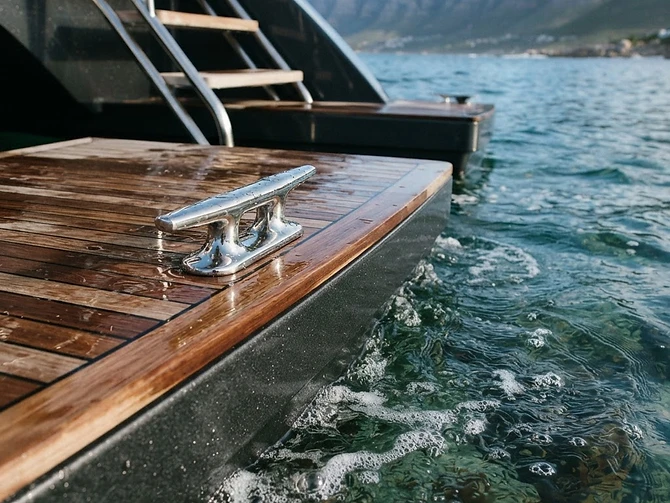
Dining at the water’s edge is a visceral act, a sensory dialogue with the Southern Ocean. As the tide pulls gently against the catamaran’s twin hulls, the rhythmic sound of water lapping against the teak deck becomes the foundational soundtrack to our meal. We eat with our hands, the bracing tang of sea salt mingling with the residual sweetness of local citrus grown in the orchards near Franschhoek. There is no pretense in this space; there is only an acute awareness of being in a place where the ocean dictates the terms of engagement. As the sun dips behind the granite peaks of the Peninsula, the hydraulic lift subtly adjusts to the rising swell, holding the table in a state of suspended animation between the deep, frigid blue of the bay and the amber warmth of the evening light. Watching the final, dying embers of the grill cool against the backdrop of the darkening coastline, one realizes that the true luxury of this vessel is not found in its speed or its finish, but in the seamless, quiet grace with which it allows the sea to climb aboard and join the conversation.






