
The Geometry of the Shallows
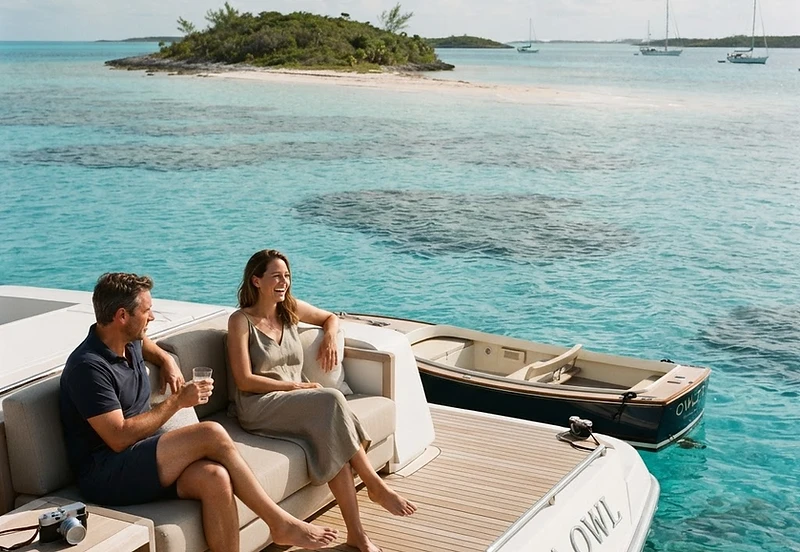
To approach a secluded Caribbean lagoon with a draft of less than one meter is to access a geography denied to the rest of the fleet. While the heavy-displacement motor yachts remain tethered to the deep-water moorings at Gustavia, their tenders buzzing like hornets toward the shore, the catamaran settles into the opal-toned silence of the inner bay at Île Fourchue. The hulls, shaped for efficiency rather than bulk, sit lightly upon the surface, their shadow dancing across a seabed of rippled white sand and sea grass. It is a quiet form of dominion, predicated on the ability to go where the water barely dares to exist. Watching the depth sounder climb from twenty meters to a mere two, one feels the visceral thrill of navigation, the vessel gliding over coral heads that remain entirely undisturbed by our presence.
Living at the Edge of the Reef
Life aboard is defined by this intimate proximity to the bottom. In the open-plan cockpit, where the teak decking meets the expanse of the trampoline, the yacht reveals its nature as a floating architectural pavilion. The structural weight of the bridgedeck is suspended between two slender hulls, creating a living space that feels more like a cantilevered villa than a maritime vessel. Beneath the hardtop, the lines are sharp and minimalist, intentionally erased by the surrounding horizon. At dawn, the silence is profound, broken only by the rhythmic splash of a green turtle surfacing near the starboard hull. Breakfast—fresh mango, local sourdough, and coffee poured into heavy ceramic mugs—is served while the sun bleaches the sky to a pale, translucent blue.
As the afternoon wanes, the light shifts from gold to a bruised violet. One finds oneself standing on the bow, watching the anchor chain disappear into the clear, crystalline water. The ritual here is not about movement, but about stillness. We are anchored in a sanctuary where the tide dictates the social calendar. There is a singular pleasure in watching the larger, deep-draft yachts remain leagues away, restricted by their size from entering this specific theater of the sea. Our proximity to the beach allows us to wade directly from the sugar-soft sand into the refreshing embrace of the Caribbean, a luxury that requires no tender and no coordination, only the desire to simply be.
The Art of the Vanishing Point
The act of anchoring here is a practice in restraint and observation. There is no urgency in the swing of the boat, only a gentle, slow-motion recalibration as the trade winds shift their quarter. The yacht becomes a silent participant in the ecosystem, casting a shadow that interests the passing reef fish more than it alarms them. To live this way, even for a short interval, is to understand that true luxury is not defined by the sheer scale of the vessel, but by the ability to vanish into the landscape without leaving a mark.
As the stars begin to pinprick the velvet dark above the masthead, the world seems to contract into the small, warm circle of the cockpit. The salt air feels thick and grounding, a reminder of the thousands of miles of ocean that buffer this isolated paradise. We have reached the edge of the map, held fast by a single anchor and the quiet confidence of a design perfectly suited to its environment. In these moments, the yacht is not merely a mode of transport; it is a lens through which we view the world, refined, curated, and held in suspension between the sea and the sky.






