
The Vertical Approach
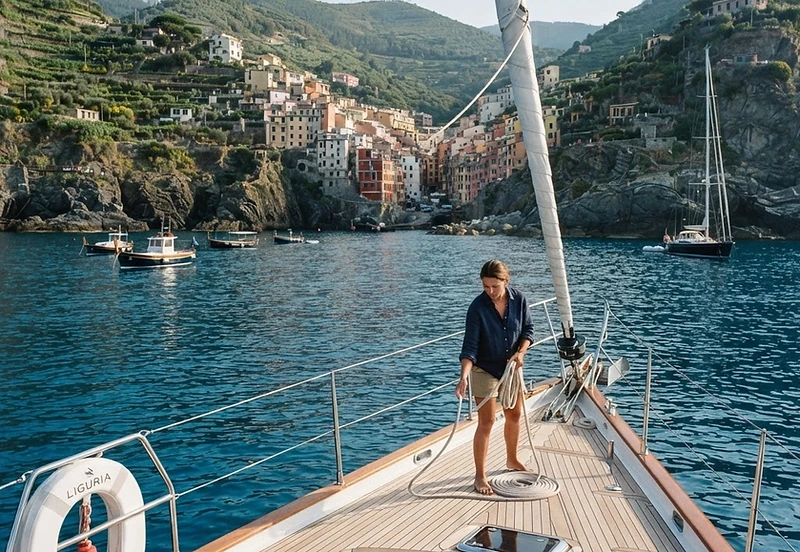
Approaching the Cinque Terre from the water, one immediately understands why the yacht must remain at a respectful distance. The coastline is not a gentle slope but a sheer cliff-face, a geological barrier that has long defied standard cultivation. From the flybridge of our 40-meter custom vessel, the scale of the landscape is disorienting; the vineyards appear as delicate, stone-wrought lace pinned to the mountain. As our vessel held station in the deep, crystalline cobalt of the Tyrrhenian, the captain verified our drift against the granite massifs that plunge directly into the sea. There is no marina here to accommodate a vessel of our displacement, only the necessity of a well-set anchor and a rigid-hulled tender ready to bridge the gap between the teak deck and the rugged, sun-baked landings. The sensory transition from the hum of the stabilizers to the silence of the cove is absolute, a reminder that we are guests of an ancient, unforgiving geography.
Stones Held by Salt
Descending to the tender, I carried with me the objective of our voyage: to trace the origin of the region’s singular viticultural history. The vineyards of Liguria are architectural feats, a complex network of dry-stone walls designed to hold the thin, acidic soil against the unrelenting gravity of the sea. Standing among the vines in Vernazza, one feels the constant, cooling embrace of the mistral, a wind that carries the brine of the ocean into the very pores of the grapes. It is a terroir defined by isolation. The logistics of harvest here are as demanding as a mid-Atlantic crossing; everything must be moved by hand or by small, gear-driven monorail systems that cling to the rock like barnacles on a hull. The local growers speak of the 'heroic viticulture' required to sustain this land, a phrase that resonates with anyone who has spent a lifetime navigating by wind and current. This is not agriculture for the faint of heart, but rather a mastery of equilibrium between stone, vine, and the relentless spray of the surf.
The Evening Equilibrium
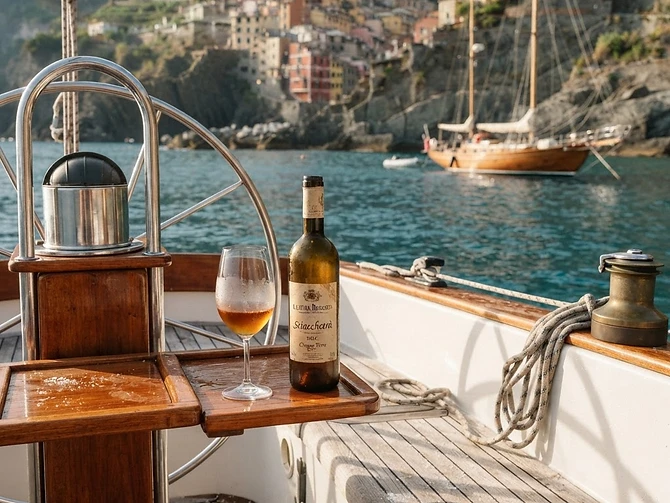
Returning to the yacht as the sun dipped toward the horizon, the transformation of the landscape was complete. The golden hour turned the rock face to amber, mirroring the deep, honeyed hues of the local vintage we prepared to open. On the aft deck, with the anchor chain tensioned and the boat pivoting slowly with the evening tide, the wine tasted of the very ground we had just visited—a concentration of citrus, salt, and sun-drenched slate. The conversation was sparse, punctuated only by the rhythmic lapping of water against the swim platform and the distant, muffled chime of church bells echoing off the rock. We watched the lights of the distant villages flicker on, vertical markers against the dark velvet of the Ligurian night. There is a profound stillness in being aboard when the day’s navigation ends, a quiet satisfaction in knowing that the vessel, like the vines on the cliffs, has found its own perfect, temporary hold against the currents. The engineering of the yacht, all carbon fiber and refined hydraulic systems, felt harmoniously anchored beneath the ancient, crumbling ingenuity of the shore. Whether mapping a route through the Mediterranean or contemplating a vintage that refuses to exist anywhere else on earth, the rhythm remains the same: a profound respect for the geography that commands our passage.






