
The Vertical Watch
In Positano, the cliffside does not merely hold homes; it cradles the very essence of the maritime horizon. From a terrace carved directly into the rock face—a vantage point that feels suspended somewhere between the clouds and the Tyrrhenian—the descent to the water is a steep, emerald-toned tumble. The connection to the anchorage below is visceral. Here, the architecture is a study in restrained luxury: whitewashed stone, cooling terracotta, and vaulted ceilings that echo the clean, functional lines of a modern explorer vessel. As the morning mist lifts, revealing the signature pastel sprawl of the village, the view inevitably pivots away from the land. The focus narrows to the rhythmic, hypnotic movement of tenders weaving through the deep cobalt, ferrying guests from steel-hulled giants moored in the bay to the private, salt-slicked piers below.
The Geometry of the Anchorage
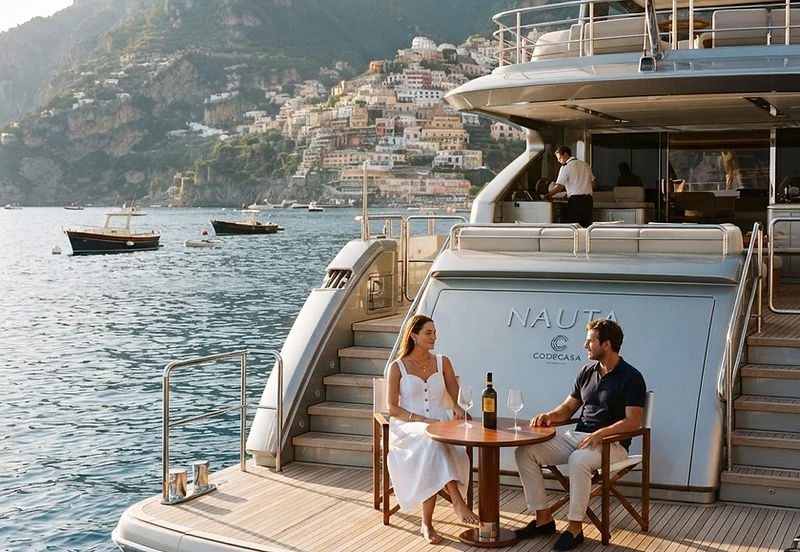
To watch the bay from this elevation is to understand the tactical grace of the superyacht captain. Each vessel, from the sleek, low-profile performance sailers to the towering, multi-decked motor yachts that cast long shadows upon the waves, occupies its space with undeniable intentionality. The architecture of the home serves as a silent grandstand for the daily theater of anchoring. Through a pair of high-powered binoculars, one observes the precise, methodical deployment of the chain, the calculated drift as the boat finds its equilibrium against the stubborn pull of the current, and the subsequent, leisurely transformation of the aft deck into a sanctuary of mid-day stillness. The terrace, much like the meticulously scrubbed teak-laid deck of a Riva or a custom Perini Navi, is designed for the singular purpose of orienting oneself toward the water, a bridge between the solid earth and the fluid sea.
The sea demands a certain kind of stillness, a quiet readiness that is mirrored in the way a well-appointed terrace waits for the wind to shift or the tide to turn.
The Ritual of the Horizon
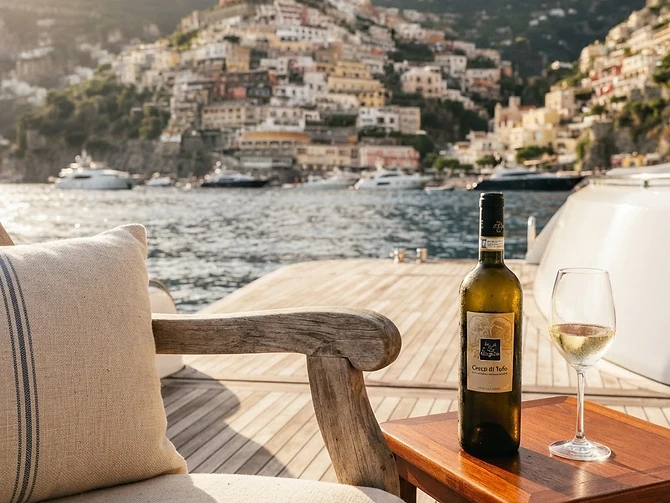
There is a specific, tactile rhythm to a late afternoon in Positano. I remember sitting on the limestone ledge, the stone still radiating the heat of the day, as a crew member on a neighboring superyacht adjusted the heavy canvas awnings, a sound like a distant, crisp sail snap. As the sun begins its slow, amber descent behind the jagged spine of the Lattari Mountains, the lifestyle of the villa merges seamlessly with the lifestyle aboard. The uncorking of a bottle of local white—a sharp, mineral-forward Falanghina from the volcanic slopes—is a ritual shared simultaneously by those on the terrace and those lounging on the sundecks below. The liquid is cool, biting, and bracing, bridging the gap between the terrestrial and the nautical. It is a moment of synchronization—a shared, unspoken appreciation for the slow, golden passage of time at anchor. As the lights on the yachts flicker to life, casting long, shivering reflections of white and gold across the darkening water, the distinction between living in a house and living on the sea becomes refreshingly, beautifully blurred. Both offer the same promise: an existence defined by the tide, the wind, and the relentless, shifting beauty of the Mediterranean blue.
Ultimately, this coastal perch provides more than just a view; it offers a vantage point on the art of navigation and the discipline of repose. Whether anchored in a shallow cove near Li Galli or settled upon the cliffside, the goal remains the same: to exist in harmonious tension with the sea, waiting for the next breeze to dictate the course of the evening.






