
The Approach from the Blue
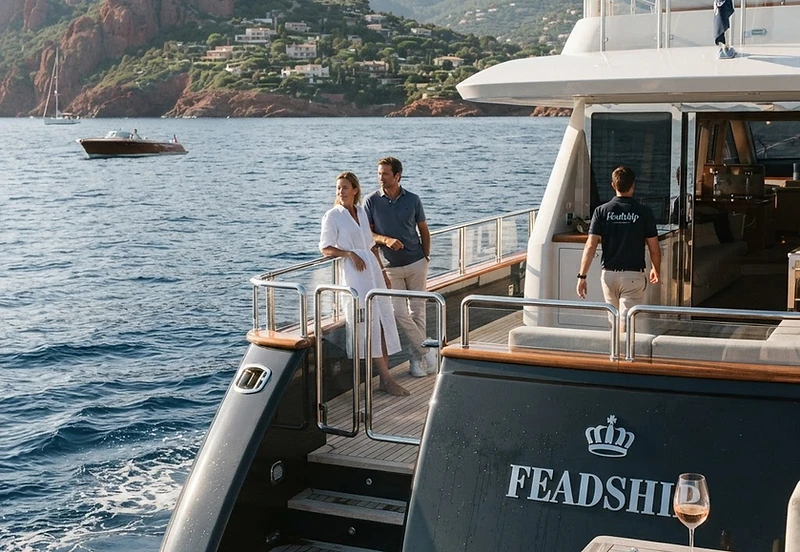
The transition from the deep-water anchorage to the shoreline of the Côte d'Azur is a delicate exercise in nautical choreography. As the 45-metre vessel—a sleek profile against the morning haze—sits steady in the gentle swell off the coast of Théoule-sur-Mer, the tender is lowered with a practiced, near-silent efficiency. The salt-crusted air carries the intoxicating scent of maritime pine and crushed limestone, a fragrance uniquely characteristic of these craggy Provençal cliffs. Negotiating this passage requires a keen eye on the depth sounder; the transition from the cobalt abyss of the yacht’s mooring to the shallows near the villa’s private jetty feels like a tightening of scales. The heavy, resonant roar of the yacht’s engines gives way to the rhythmic, hypnotic slap of water against the tender’s hull, a sound that signals a shift from the grandeur of open-water cruising to the intimacy of the littoral.
Architectural Anchors in the Limestone
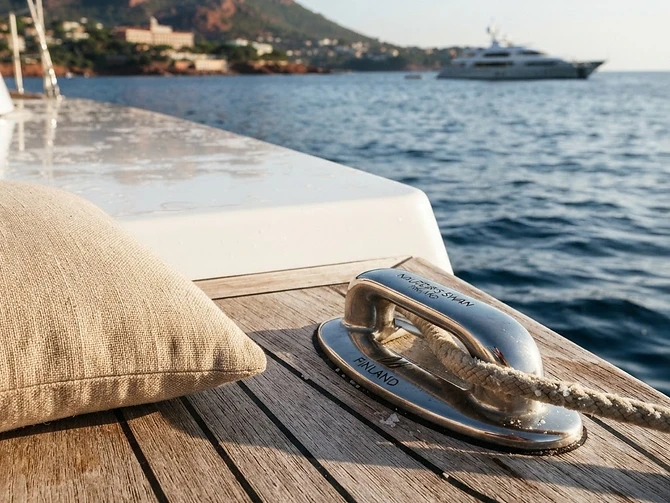
The villa itself emerges from the maquis as a natural extension of the cliffside, a masterwork of mid-century lines that echo the structural honesty of the yacht anchored just offshore. Its geometric terraces are stacked like a ship’s bridge, offering an unobstructed vista of the Ligurian Sea. For the crew, the arrival is a ritual of precision; the fenders are deployed with deliberate care against the weather-worn stone of the jetty, a stark, functional contrast to the polished stainless-steel rails of the tender. Inside the estate, the architecture prioritizes the view—the same panoramic, shifting horizon that dictates the life of those aboard the yacht. There is a palpable interplay here between the fixed, immovable stone of the estate and the kinetic, floating presence of the vessel. It creates a tension that defines the quintessential Riviera summer, where one is never truly untethered from the sea, even while standing on terra firma.
The Rhythms of the Meridian
Life aboard and life within the villa are governed by the same unspoken, solar clock. One morning, while waiting for the tender, I found myself watching the deck steward polish the teak with a focus bordering on the monastic. There is a specific serenity to these moments—the way the light catches the wake of a distant passing trawler, or the taste of a chilled, bracing espresso served on the aft deck before the heat of the day truly sets in. The villa provides a momentary reprieve from the perpetual motion of the sea, yet the connection remains tethered by the sight of the mastheads swaying rhythmically against the clouds. To spend an afternoon here is to move between two forms of sanctuary: one defined by the permanence of Mediterranean masonry, and the other by the disciplined, ever-shifting grace of a well-found ship at anchor. When you retreat to the cool, shaded interiors of the estate, you still hear the low hum of the bilge pumps and the distant call of seabirds, constant reminders that the vessel is a living, breathing entity waiting for your return.
As the afternoon light wanes and the sun begins to bleed into the horizon, the return to the yacht becomes an inevitability. The tender cuts a crisp, white wake through the glassy, cooling surface, leaving the stone-wrought solitude of the villa behind. The transition back to the main deck—a shift from the terrestrial to the maritime—is a return to the true center of the voyage. Here, amidst the quiet bustle of the crew preparing for the evening’s anchorage, the only architecture that matters is the clean, flowing line of the hull meeting the current, carrying us toward whatever horizon the morning decides to reveal.






