
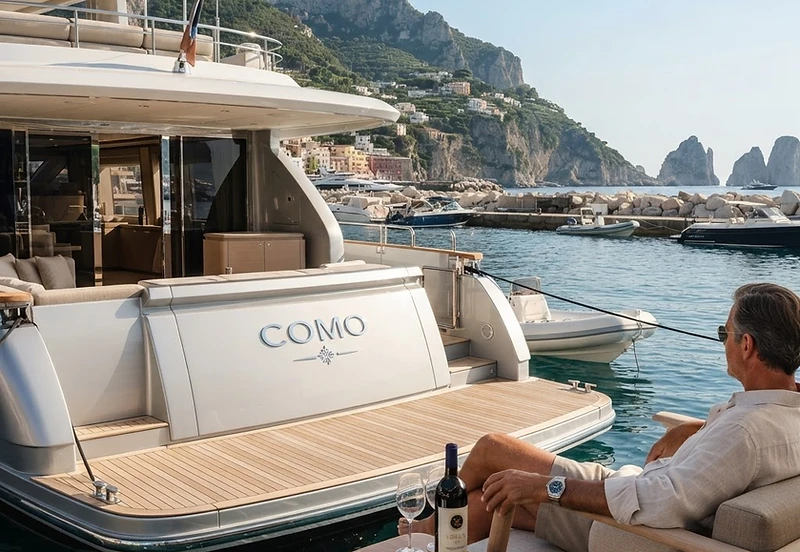
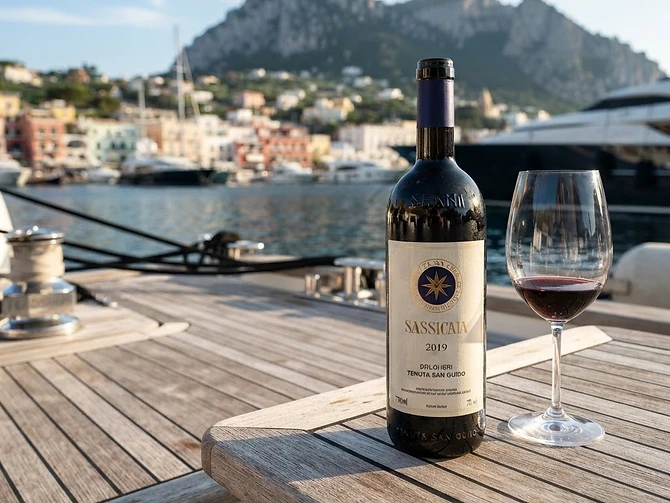
The sun was already dipping behind the dramatic verticality of Monte Solaro, casting a long, cooling shadow over the aft deck of the Feadship Como. We were swinging gently at anchor off the Marina Grande, the chaotic energy of the Capri docks reduced to a distant, rhythmic murmur. On the polished teak, the transition from the frantic pace of the morning’s passage across the Tyrrhenian—where the hull cut through the chop with that signature, unshakeable Feadship stability—to the deliberate, heavy stillness of late afternoon felt absolute. The sea here is a deep, bruised cobalt, and as we turned, the proximity of the rugged coastline reminded us that we were not merely floating, but existing in a state of suspended architectural grace.
The Geometry of the Horizon
There is a specific cadence to arriving in Capri by sea that no commercial vessel can replicate. To approach the island on your own terms is to witness the sheer limestone walls rising from the depths like the prow of a gargantuan, sunken ship. From our position, the Faraglioni rocks stood as jagged sentinels against a sky bleeding into violet and bruised gold. Como, with her bold, clean lines and expansive glass apertures, acts as a floating gallery, blurring the threshold between the interior living space and the limestone-rich topography of the coast. To sit here, protected by the structural overhang of the bridge deck, is to experience the Mediterranean as an extension of one’s own private library.
We spent the late afternoon watching the local gozzi boats return to the harbor, their wooden hulls weathered and salt-worn, providing a tactile, historical counterpoint to our own gleaming, high-tech surroundings. The contrast is essential to the yachting experience; one learns to appreciate the silent, high-speed engineering of a modern masterpiece while acknowledging the humble, timeless traditions of the sea that surround it. The crew moved with a quiet, practiced invisibility, clearing glasses with a grace that matched the rising moon, their presence felt rather than heard, a necessary component of the vessel’s fluid operation.
A Study in Anchored Stillness
As the light failed, the conversation shifted from the mechanics of the passage to the inherent design of the yacht itself. A tray of fresh, lightly grilled sea bass arrived, seasoned only with local Amalfi lemons and the finest Mediterranean sea salt. The meal was simple, perhaps even ascetic, yet it felt monumental in the context of the anchorage. In the distance, the lights of a tender—returning guests from the sun-drenched terraces of La Fontelina—flickered across the bay like a stray constellation, anchoring us firmly in the reality of a world that prioritizes the slow, meticulous pleasure of the moment. We watched the vessel’s lights reflect against the dark water, the rhythmic oscillation of the mast light blinking in time with the swell.
Beneath us, the anchor chain settled into the sandy seabed with a final, metallic thud, a sound that signals the end of navigation and the beginning of reprieve. There is a profound, almost primal satisfaction in that sound; it is the definitive closure of the day’s journey. The air grew cool, carrying the scent of wild rosemary and distant jasmine carried on the breeze from the island cliffs above, a reminder that while we are of the sea, the land is never truly far away.
We lingered well past the hour when the tourists had vanished from the piazzas above. On the deck of the Como, the transition from the heat of the passage to the cooling luxury of the berth felt like a personal achievement. As the stars began to pin themselves to the velvet canopy of the sky, the true luxury of the yachting life revealed itself: not in the speed or the scale of the craft, but in the rare, unhurried permission to simply be.






