
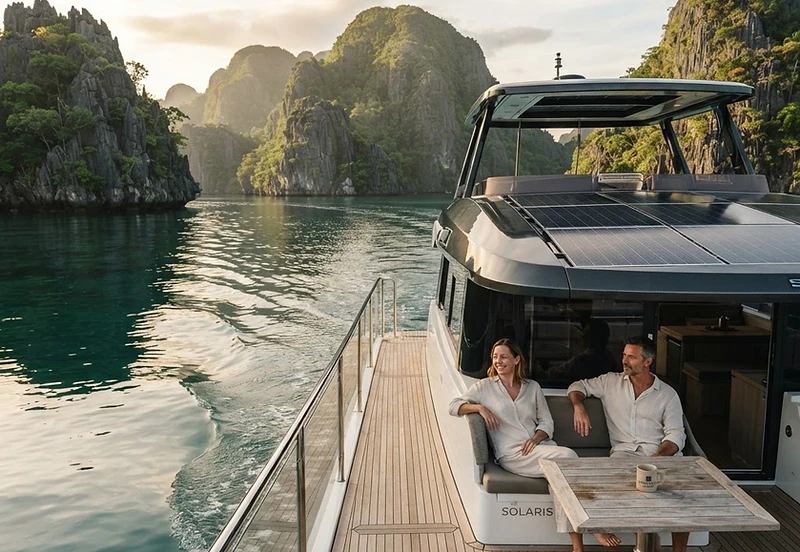
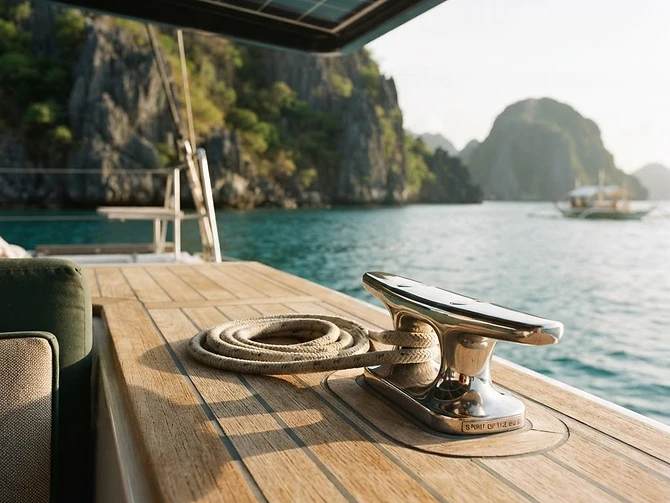
The morning off the coast of El Nido arrives not with the rumble of diesel, but with the subtle, harmonic hum of the electric drive. We are aboard a custom-refitted 80-foot catamaran, her hardtop integrated with high-efficiency photovoltaic cells that have been drinking in the tropical intensity of the Sulu Sea since dawn. As we slip the moorings at Lagen Island, the water is a mirror, barely rippled by our passage as we head toward the towering limestone monoliths of the Bacuit Archipelago. This is a journey defined by the absence of noise, a rare and modern form of silence that allows the sailor to engage more deeply with the ancient geology of the Philippines.
The Weightless Glide Through the Karsts
Steering through the labyrinthine channels between Miniloc and Entalula, the lack of vibration is transformative. Usually, the relentless thrum of a traditional engine masks the oceanic pulse; here, one hears the gentle slap of water against the hulls and the distant, haunting call of sea eagles circling the cliffs. It is an exercise in nautical restraint. The helm feels tethered directly to the current, and as the solar array tracks the climbing sun, the battery banks remain steady, providing enough torque to maintain a serene, consistent six knots. We are not just traversing a cruising ground; we are moving in sympathy with the environment. The limestone walls, which rise hundreds of feet directly from the sea, seem to amplify the silence, turning our passage into a meditative drift through a cathedral of stone and salt. The clarity of the water is so profound that one can see the shifting patterns of the seafloor, tracing the flight of schools of fusilier fish as they dart beneath our keels.
The Rhythm of the Aft Deck
Life aboard during these sun-powered runs dictates a softer, more deliberate pace. As the midday heat intensifies, the crew sets the table on the aft deck with a selection of fresh calamansi juice and local pomelo, prepared by the chef using the galley’s induction range—all energized by the morning’s solar intake. There is no urgency to arrive, only the pleasure of the transit itself. We observe the ritual of lunch in the shade of the bimini, watching the green-blue water shift in opacity as we pass over the complex coral gardens near Shimizu Island. It is in these moments—the taste of the sharp, citrus-heavy juice, the slight breeze cutting through the heat, and the sight of the jagged karst formations reflecting on the water—that the true privilege of yachting reveals itself. The transition from active navigation to a languid afternoon anchorage becomes seamless; we arrive at our destination with silent grace, the yacht swinging gently to her anchor without a single plume of exhaust to mar the crystalline clarity of the air.
An Evening Beneath the Karsts
As the sun begins to dip behind the jagged horizon of Palawan, the batteries have done their work. The quiet is absolute, broken only by the occasional clatter of a anchor chain paying out or the distant ripple of a kayak paddle. The evening light turns the limestone faces from a stark, sun-bleached white to a warm, bruised violet. We sit on the transom steps, dangling our feet in the cooling water, listening to the crew share stories of the morning’s transit. It is a reminder that in these waters, the most sophisticated luxury is not found in high-horsepower excess or grand, sweeping statements of wealth, but in the ability to move through such a fragile, breathtaking seascape without leaving a mark. Here, the vessel feels less like a piece of machinery and more like an extension of the sea itself, a quiet observer of one of the planet's most sequestered corners.






