
The Fluid Boundary at Anchor
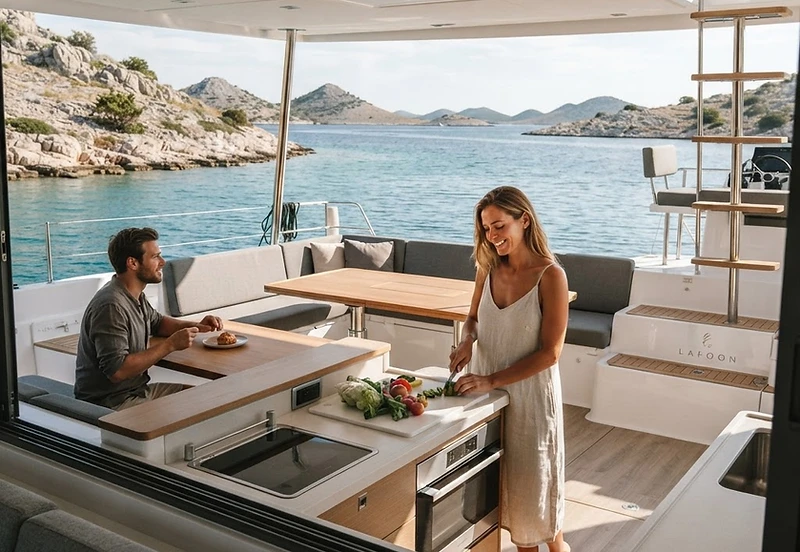
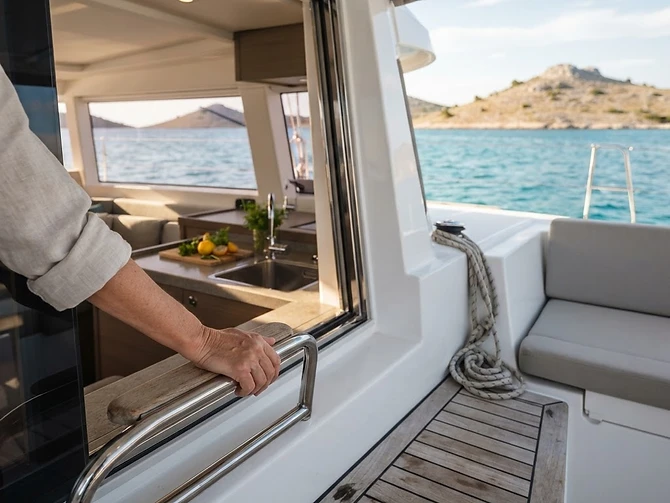
As the Lagoon 52 slips into the sheltered, piercing blue of the Kornati archipelago, the heavy rumble of the twin engines finally yields to the rhythmic slap of water against the hulls. Here, amidst the arid, sun-bleached limestone islands of Croatia, the architecture of the yacht dictates the pace of the day. The transition from the interior saloon to the expansive aft-deck is entirely unobstructed, a seamless design choice that turns the galley into an extension of the sea itself. We lean against the wide quartz counter, watching the chef prepare a simple lunch of Adriatic sea bass, filleted only moments ago. The heat from the grill catches the salt-heavy breeze and carries it toward the rocky, desolate shoreline of Levrnaka, blurring the distinction between the culinary preparation and the rugged landscape outside.
Tactile Rhythms of the Aft-Deck
Life aboard a catamaran during a deep-summer Croatian crossing is defined by the deliberate absence of walls. By noon, the cockpit table—a solid teak island anchored in the center of the deck—becomes the true heart of the vessel. The ritual of the midday meal here is stripped of formal pretense; it is dictated entirely by the movement of the sun across the archipelago. We set down our navigation tablets and chart plotters, the flickering digital blue lines of our planned passage fading into the physical, high-definition reality of the limestone islands. The faint, sharp scent of wild rosemary, drifting from the nearby scrubland, mixes with the saline air and the peppery aroma of cold-pressed olive oil as we plate the fish. It is a sensory dialogue between the land we have just explored and the galley that sustains our voyage.
The Evening Drift
As the afternoon light deepens into the amber hues typical of the Adriatic, the aft-deck transforms once more. The Bimini top filters the glare, casting long, rhythmic shadows across the deck as we prepare for the evening’s quiet anchorage near the imposing, sheer cliffs of Kornat. There is a profound, meditative stillness in realizing that the kitchen is no longer a confined space, but a vital participant in the voyage. We watch the anchor chain settle, a final, metallic echo in the heavy silence of the cove, knowing that the night will be spent under the wide, unpolluted sky. Dining here is not merely about the consumption of food; it is an act of anchoring oneself within the environment. It is a quiet observation of the tides shifting against the transoms and the steady, gentle rocking that marks the end of every day at sea, where the boundaries between the vessel and the Adriatic dissolve entirely.
We linger long after the plates are cleared, listening to the water lap against the stern—a sound that serves as both a lullaby and a reminder of the thousands of miles of open blue that lie beyond the islands. As the stars emerge, the galley’s soft, warm illumination reflects against the glass, and the yacht feels less like a machine and more like a sanctuary, held perfectly in the cradle of the Kornati.






