
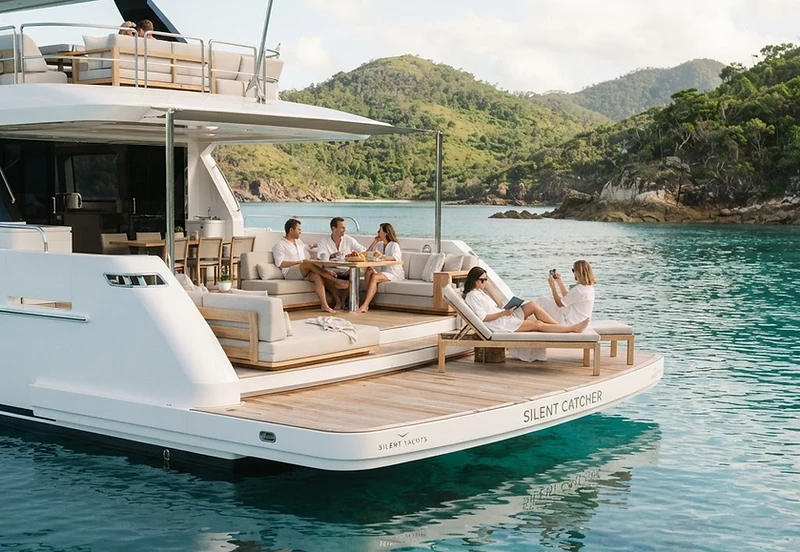
The morning off the coast of Hook Island was punctuated not by the familiar, vibrating thrum of diesel engines, but by the rhythmic lap of the Coral Sea against the hull of a 45-meter custom catamaran. As we slipped away from the anchorage, the only audible presence was the faint creak of the halyards and the piercing, sharp call of a sea eagle circling the ancient limestone cliffs above. This is the emerging reality of the charter circuit in the Whitsundays, where a sophisticated fleet of hybrid-electric yachts is proving that the most profound luxury is no longer mere ornamentation, but the ability to navigate without disturbing the crystalline stillness of the Great Barrier Reef.
The Architecture of Silence
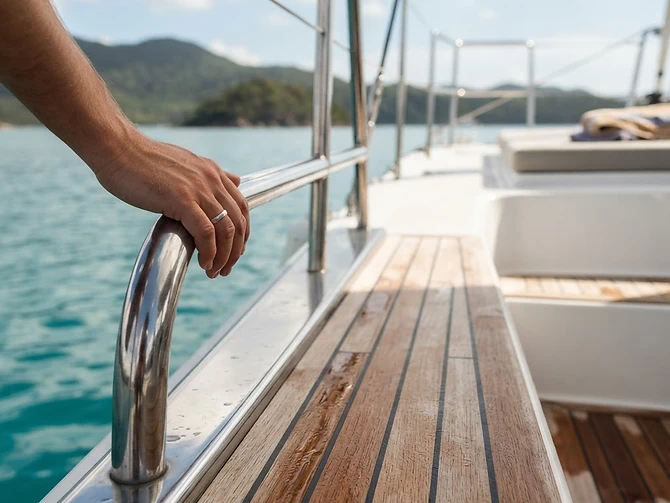
Navigating the passage toward the iconic, sheltered waters of Butterfly Bay, the shift in atmosphere is not just heard; it is deeply felt. On a traditional vessel, a morning transit is often a functional exercise of noise and vibration, a constant mechanical heartbeat felt through the soles of one’s feet. Aboard this hybrid craft, however, the experience is transformed into something ethereal. Guests lounge on the expansive teak decking, reading or simply tracing the water’s edge with their eyes, entirely untethered from the persistent background resonance that has long defined life aboard motor yachts. The propulsion systems, utilizing high-density battery banks, allow the yacht to maneuver through narrow, treacherous channels with a poise that feels almost organic. It is a refinement of the charter experience that prioritizes the sensory environment, ensuring the transition from open sea to protected cove is seamless and undisturbed.
Rhythms of the Reef
Life aboard adapts to this quietude in subtle, profoundly human ways. Without the engine room’s constant hum, the ambient sounds of the tropical coast—the gentle rustle of palm fronds on Langford Island, the precise, delicate clink of fine porcelain during a mid-morning breakfast of starfruit, passionfruit, and warm local sourdough—become the essential soundtrack of the day. As we reached the mooring, the crew deployed the tender with a whisper of hydraulic movement, maintaining the sanctity of the bay. Afternoon rituals here are dictated by the tide rather than the limitations of a fuel gauge. We spent hours snorkeling the northern shoals, knowing the yacht’s silent hold would remain undisturbed by the usual exhaust haze. There is a newfound, sacred intimacy in arriving at a secluded inlet, stepping off the gangway into a sanctuary that feels truly untouched by the machinery of our travel.
An Evening in the Whitsundays
As the sun began to dip behind the jagged peaks of the Whitsunday Islands, casting long, bruised shadows of indigo and violet across the water, the transition to silent, battery-fed power became even more poetic. We anchored for the evening, the vessel perfectly still, holding its position against the gentle current with effortless grace. There was no need for the generator to break the humid evening air; the cabin remained cool and composed, powered by the solar harvest gathered during the silent run. I remember sitting on the aft deck, watching a pod of dolphins navigate the same wake-less path we had carved through the water earlier that day. It is a departure from the traditional maritime tempo—a deliberate move toward a more observant, resonant way of existing on the water, where the vessel acts less like an intrusion and more like a thoughtful extension of the seascape itself. In this quietude, we do not just visit the Whitsundays; we finally hear them.






