
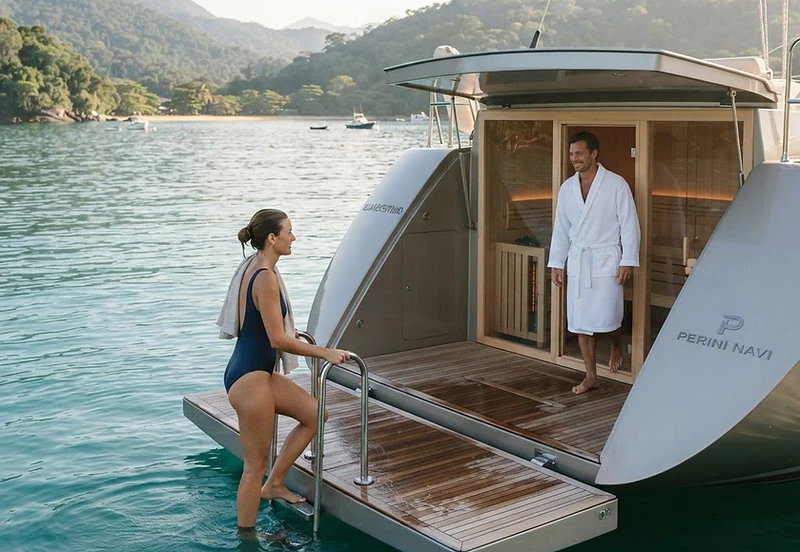
The morning light in Ilha Grande Bay is not merely a change in illumination; it is a physical weight, shifting the deep, bruised purples of the pre-dawn horizon into the electric, saturated greens of the Atlantic rainforest that crowds the shoreline. Anchored off the northern tip of Ilha Grande, our 40-meter Perini Navi swung gently, her teak decks still holding the cooling moisture of the night. There is a particular, profound silence at 06:00 here, punctuated only by the distant, rhythmic slap of water against the hull and the occasional, sharp cry of a frigatebird circling the mangroves.
The Initial Immersion
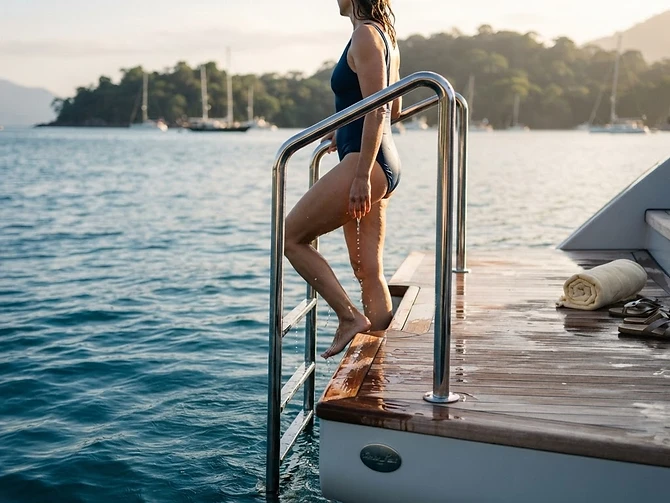
Stepping out onto the aft deck, the air felt thick with the scent of damp earth and salt, a sensory reminder that we were tucked deep within the Costa Verde’s protective embrace. The ritual is never rushed. Before the crew begins the day’s preparation—the stowing of fenders, the calibration of navigation gear, the quiet readiness of the tenders—there is the first swim. Slipping over the side of the transom, the water is shocking, a sharp, bracing departure from the humid air. The Atlantic here, sheltered by the mainland, is remarkably still, yet it carries the deep, cold weight of the currents that sweep up from the southern reach. It is a moment of absolute clarity. Underwater, the light fractures into long, dancing ribbons that play against the hull’s white paint. Swimming away from the vessel, the silhouette of the mast against the rising sun creates a sense of scale that is both humbling and intensely private. This is not the leisure of a resort; it is the fundamental negotiation with the sea that defines life aboard a vessel of this size.
The Geometry of Heat
Returning to the deck, dripping and shivering slightly, the transition is the true architecture of our wellness routine. We move from the open, expansive reality of the ocean to the deliberate, contained warmth of the onboard sauna, a cedar-lined sanctum nestled into the superstructure. It is a striking contrast: the vast, uncontrolled humidity of the Brazilian coastline against the dry, controlled intensity of the heat. Sitting in the stillness of the sauna, looking out through the small, toughened glass port at the slow drift of mist across the slopes of Pico do Papagaio, one feels the tension of the previous day’s passage—the constant adjustment of the winches, the vigilant eye on the depth sounder—simply evaporate. The cedar wood, heated by the boat’s electrical systems, gives off a faint, resinous perfume that anchors the mind. It is in this hour, before the VHF crackles to life or the first tender departs for the village of Vila do Abraão, that the real pulse of the voyage is measured. There is no urgency to arrive anywhere else. The yacht, in this moment, is not a vessel of transit, but a vessel of restoration.
As the sun finally clears the peaks, turning the bay into a shimmering expanse of hammered silver, the ritual concludes. The deck crew has begun their rounds, the smell of fresh coffee wafting from the galley toward the bridge. We emerge from the sauna, refreshed and clear-eyed, ready for the day’s exploration of the hidden coves. The sea remains, as it always does, the silent partner in the process—a vast, cold engine of nature that demands we find our own small ways to bridge the gap between its indifference and our presence upon it.






