
The Absence of Engine Noise
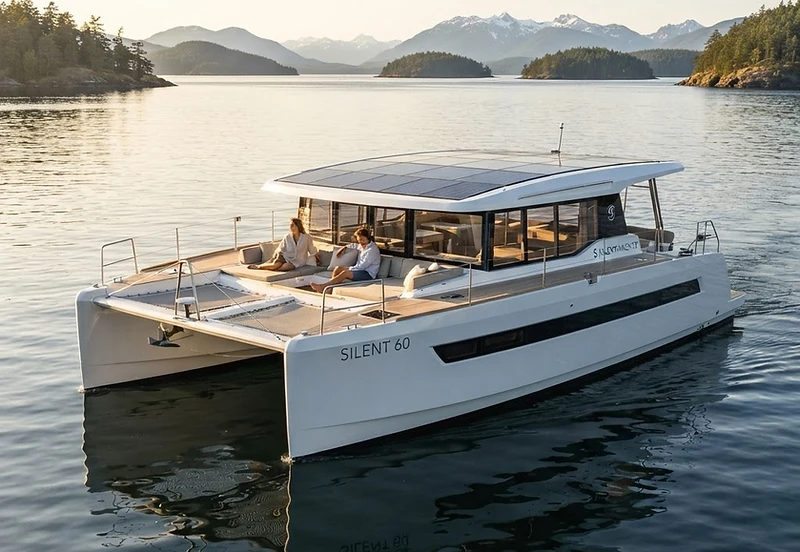
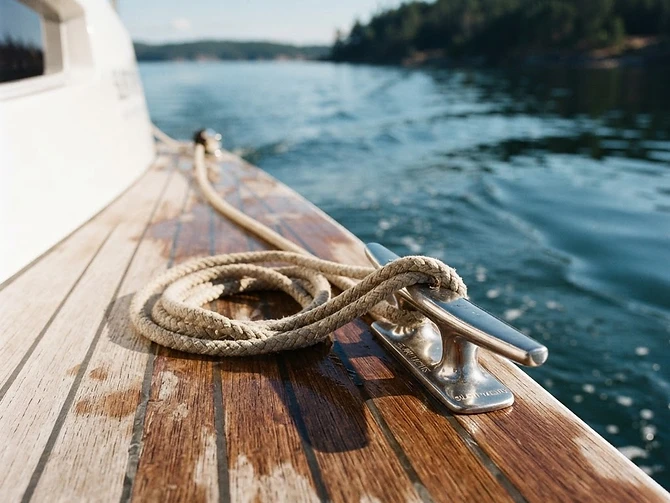
The dawn off the coast of Orcas Island did not announce itself with the familiar, low-frequency tremor of twin diesels. Instead, the transition from sleep to the morning watch was marked only by the rhythmic lap of the Salish Sea against the asymmetric hulls of the Silent 60. As the sun crested the dense, coniferous tree line of the San Juan Islands, the expansive solar array—a sleek, dark skin integrated into the coachroof—began its silent harvest, trickling energy into the lithium banks below. Standing on the teak foredeck, I could distinguish the sharp call of a distant Steller sea lion from the faint, melodic creak of the halyards against the mast, sounds usually swallowed by the constant, aggressive vibration of a traditional combustion engine. There is a profound, almost jarring intimacy to cruising without the mechanical heart-throb of a fuel-burning vessel, a weightlessness that fundamentally alters one's relationship to the water beneath the keel.
Rhythms of the Protected Reach
By mid-morning, we were threading the needle between the islets of the Wasp Islands, a designated marine conservation area where the mandate is to tread with absolute deference to the delicate ecosystem. Navigating these narrow passes requires an awareness of the tide that is visceral rather than theoretical; the water rushes through these rocky channels with the unyielding force of a mountain river. At the helm, the Silent 60 responded to the smallest flick of the wheel with immediate, electric torque, allowing us to hold our station against the surging current with surgical precision. Life aboard takes on a distinct, elevated cadence when the boat itself acts as an extension of the environment rather than a disruption to it. We paused for lunch on the aft deck, enjoying a simple arrangement of fresh Dungeness crab sourced from a local fisher in Friday Harbor, paired with a chilled, high-acidity Pinot Gris from the Willamette Valley. The service was unhurried, facilitated by a galley that operated with a quiet, efficient grace, allowing conversation to linger over the natural acoustics of the cove without the need to raise voices against the drone of a generator.
The Tether of the Anchor
As the afternoon light began to mellow, turning the expanse into a sheet of hammered pewter, we dropped the anchor in the lee of Stuart Island. The ritual of the evening, far removed from the polished activity of the larger marinas at Roche Harbor, centered entirely on the sensory immersion of the anchorage. We watched the emerald kelp beds swaying in the current beneath the waterline, their long, ribbon-like fronds reaching toward the surface like an underwater forest. The crew, perfectly attuned to the stillness, moved with a practiced, low-impact focus, clearing the glassware and adjusting the deck cushions as the temperature dropped. There were no competing artificial rhythms—no ticking chronometers, no flickering exhaust, only the slow, natural rotation of the vessel as the outgoing tide pivoted us on our chain. In this protected pocket of the Pacific Northwest, the absence of noise pollution meant that the distant, liquid splash of a harbor seal felt like a significant event. We turned in as the stars began to mirror themselves in the dark, glass-still surface of the channel, the boat resting as a silent, sun-charged guardian in the drift.






